


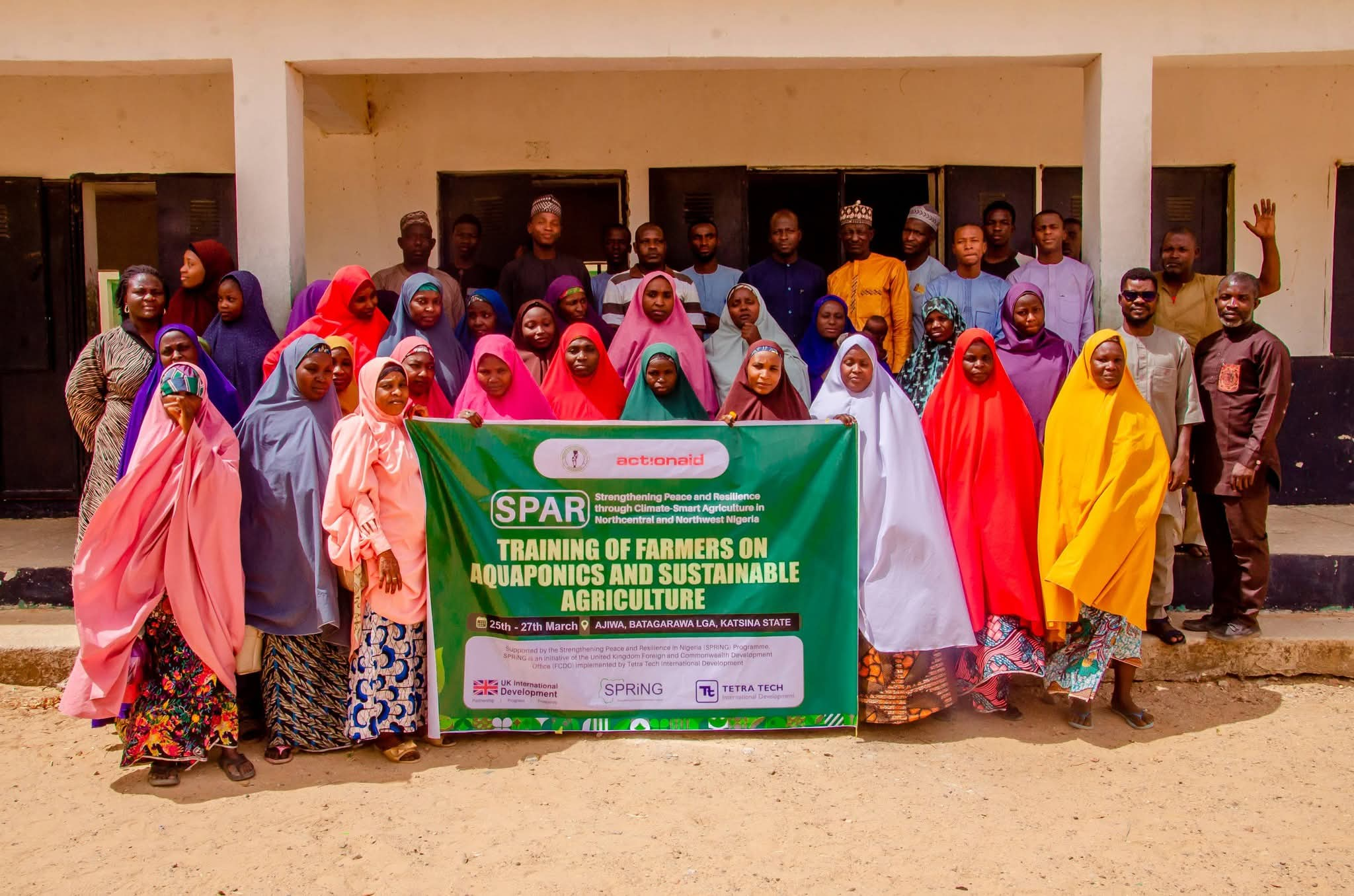
The Women Environmental Programme (WEP) has begun a three-day training for 100 farmers on aquaponics and sustainable livestock production in Ajiwa community, Batagarawa Local Government Area of Katsina State.
The beneficiaries comprise 50 crop farmers and 50 livestock producers drawn from the community.
- Katsina poultry traders lament N1.5m monthly losses to bad roads
- Katsina recovers 30,000 hectares of degraded land, supports 2.5m beneficiaries through ACReSAL
The training is part of the Strengthening Peace and Resilience in Nigeria (SPRiNG) initiative under the component known as Strengthening Peace and Resilience through Climate-Smart Agriculture (SPAR) in North Central and North West Nigeria. The project is funded by the UK Foreign, Commonwealth and Development Office (FCDO) and implemented by Tetra Tech International Development Limited.
Speaking at the opening session, the Senior Technical Officer of the SPAR initiative, Mr Ichivirbee Ukange, said the programme was designed to boost food security, improve household incomes and strengthen climate resilience among vulnerable farming and pastoralist communities in Katsina and Benue states.
He said WEP had established a rotational aquaponic farm for crop farmers and a community-managed climate-smart mini ranch for livestock keepers in Ajiwa.
According to him, the facilities are supported with capacity-building sessions on rangeland management, animal health and organic crop production.
Ukange added that similar interventions are ongoing in selected communities in Benue State.
Katsina Post reports that some of the participants who spoke with our correspondent described the training as practical and timely.
A crop farmer, Murtala Hamza, said the sessions exposed him to the link between human activities and climate change.
“Before now, climate change sounded distant to us. But we have learned how tree felling, bush burning and excessive use of chemicals affect rainfall and soil fertility,” he said.
He added that learning about aquaponics — a system that combines fish farming with vegetable production using nutrient-rich water from fish ponds — had opened new opportunities for farmers operating on limited land.
Another participant, Murja Abba, said the training broadened her understanding of erratic rainfall, flooding and poor harvests affecting her community.
She said she was particularly impressed by the demonstration on producing organic fertiliser and pesticides from neem leaves and seeds.
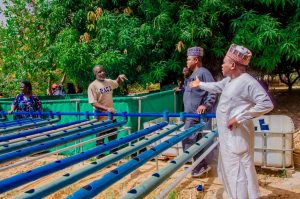
“We were taught how to soak and crush the leaves and seeds to make natural extracts that improve soil fertility and protect crops at low cost,” she said, adding that the aquaponic system would enable women to establish backyard gardens for food and income.
In the livestock category, Amina Bishir said she had learned how to identify healthy animals at the market and adopt better feeding and hygiene practices.
She said the sessions also introduced participants to crossbreeding and fertility improvement techniques to enhance productivity.
Another livestock farmer, Kabir Ibrahim, said the guided tour of the climate-smart mini ranch helped him understand structured ranch management, including feed storage, grazing units and disease prevention.
He expressed confidence that the knowledge gained would improve the health of his animals and ensure better yields throughout the year, particularly during the dry season.


 has begun a three-day training for 100 farmers on aquaponics and sustainable livestock production)