– How we are surviving amidst the ugly looks from society
By Faiza Abubakar Ardo
Ibrahim Abdullahi, a 14-year-old teenager was sighted by our reporter at a dumping site. A place considered by many as unhealthy and dangerous, the teenage boy seems to consider it as a home, where he is fed, clothed and catered to for his needs. He picks up plastics that residents have discarded as they are no longer useful, packs them into bags, and sells them to recycling companies.
Read Also: EXCLUSIVE: Living Through the Dust: How harmattan shapes life in Kano
Read Also: Plastic waste recycling market to hit $103.8bn by 2035 – Report
Like Abdullahi, thousands of youths and teenagers are now relying on the Jari Bola business as a means of earning a living. They moved from one street to another with their sack-load of plastic waste. While making a living, the plastic waste pickers contribute to the fight against climate change and strengthen the recycling sector.
The plastic business, which is popularly known as “Jari Bola” in the northern part of Nigeria, has become a household name, thereby making millions of people richer. The system operates as used plastics that have been discarded are sold to some factories that transform them into plastic plates, plastic kettles and other plastic items.
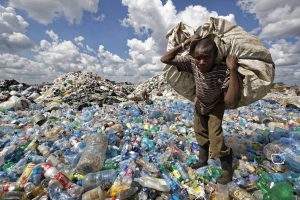
The plastic waste recycling market in Nigeria has been valued between $5 and $10 billion, with the capacity to generate over a million jobs.
Recall that the federal government had announced the ban on the use of plastic materials with effect from this year.
But in a new report titled, “Positioning Plastic Waste Recycling as an Inclusive Catalyst for Unlocking a Sustainable Circular Economy in Nigeria,” the Nigeria Climate Innovation Centre (NCIC) emphasised the potential of a circular economy for plastic waste management in Nigeria.
During a press conference in Lagos, the chief operating officer of the centre, Mr Adamu Garba, quoted the report as stating that the economic value of the country’s waste recycling market is under-tapped.
“We have about 25 million tonnes of plastic waste generated; and we ranked 9th in the world in terms of plastic waste generation; and just about 15 per cent of waste is recycled in Nigeria,” he said.
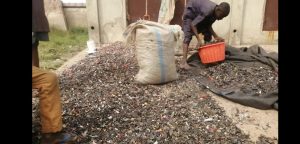
Agro Climate News gathered that aside from creating employment and providing means of living to millions of Nigerians, as well as revenue generation, the business also contributes to the global trend of turning waste into wealth as one of the Climate Action currently adopted to save global warming.
Many small-scale industries emerged and contributed significantly to the growth of industrialisation, which used to be a symbol of Northern Nigeria in the past. Sharada, Dakata and other industrial areas in Kano and other parts of Northern Nigeria are witnessing a surge of recycling industries.
Read Also: Climate Action: FG to establish recycling plants in 774 LGs
According to a Vanguard report published on June 15, 2025, Nigeria generates 2.5 million tonnes of plastic waste annually, yet recycles less than 10 per cent, as revealed by ActionAid. This reality has created a thriving but largely informal plastic recycling economy driven by collectors, processors, and small-scale traders across the country.
In many communities, those in the plastic trade buy used plastics from children and men who collect them from refuse dumps. These collectors often gather such large quantities that carrying them on their heads becomes impossible. Instead, they transport the plastics using handcarts, trucks, or lorries to local buyers. From there, the materials begin a long journey through various stages of processing before returning to factories for transformation into new plastic products.
At the processing sites, the first step involves feeding the used plastics into heavy-duty crushing machines equipped with sharp rotating blades. No matter how tough or large the plastic items are, the machines reduce them into small pieces. The crushed plastics are then taken to a water reservoir, where another machine thoroughly washes them. After washing, they are spread across wide open spaces to dry in the sun.
Once completely dried, the materials are sifted manually using baskets to remove dust and fine particles. The clean and sorted pieces are then packed into large sacks and transported to factories that recycle them into new products such as plastic kettles, plates, spoons, and other household items. Factories typically purchase the plastics based on colour separation to ensure consistency in their finished products.

Abdullahi Abubakar, a long-standing practitioner in the trade, told Agro Climate News that many processors sell their materials to A.A. Garai Company, while others supply to Diamond Company and M.C. Plastics. Although some traders involve women and children as young as eight, Abdullahi explains that his own group avoids engaging very young children due to the risks associated with the work. Instead, they accept only those aged 13 and above.
The ugly look from society
Despite the risks and stigma, the business is lucrative. Another practitioner, Mohammad, explained that buying a batch of used plastics for ₦15,000 could yield up to ₦25,000 after processing and resale. However, not everyone values the trade.
Ibrahim, another trader, told Agro Climate News that many people look down on the business because it is linked to scavenging, locally known as Jari Bola.
“It is risky because you can get injured while picking plastics from refuse. And people don’t admire the work because it involves going from one dump to another and dealing with the smell. But believe me, many people in this business are very rich,” he said.
For people like Musdafa ‘Mai Wanki’, who specialises in washing the crushed plastics, the stigma is equally strong. He has been washing plastics for two years and, although his job does not involve picking from refuse, he says people still look at him with disdain.
“Some people see me as a disgusting person, yet they are not ashamed to ask me for money or to buy things for them — even some of my relatives,” he said. According to him, those who enter the bola business often do so reluctantly, but once they get used to it, they find it hard to leave because of how profitable it is.
“When I finish work, go home, and take my bath, nobody would think I am a dan jari bola,” he added.