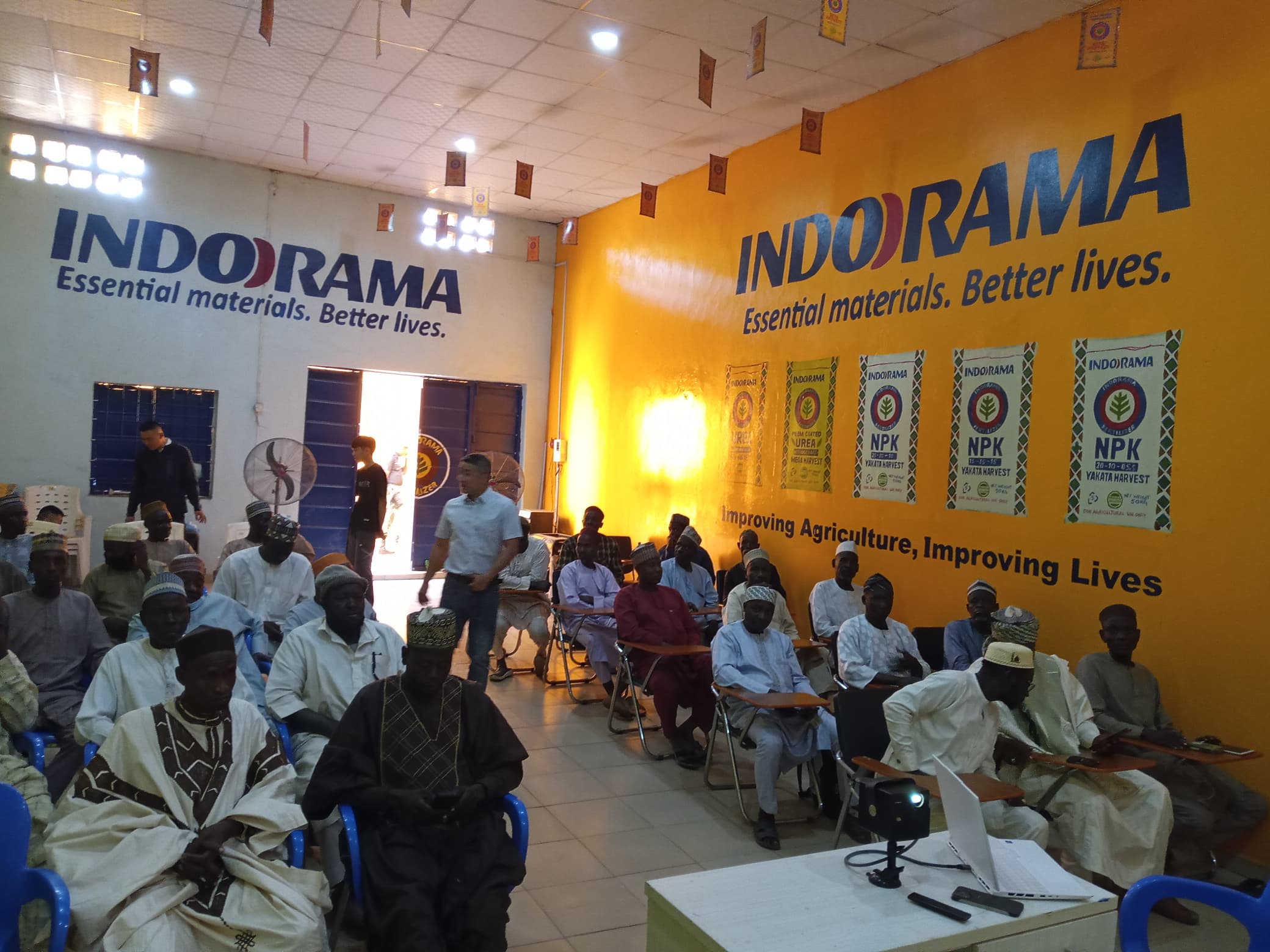
By Ahmad Saleem
A Chinese agricultural expert who has lived in Nigeria for 16 years says his long experience working with rural farmers is what inspired him to introduce a new high-tech spraying system aimed at cutting production costs and boosting yields for smallholder farmers in Kano State.
Charles Lee of Smartisan Investment Nigeria Limited said the innovation, an agricultural “spray drum” capable of covering 10 hectares a day was born out of years of witnessing Nigerian farmers struggle with labour shortages, pest infestations, rising input prices and low productivity.
Read Also: 5 countries in Africa that experience snowfall
Read Also: Youth participation in Agriculture key to Global Food Security – IITA
“I have spent 16 years in Nigeria, mostly on farms with rural communities. I have seen farmers lose almost half their crops because they could not spray on time,” he told Agro Climate News during a field demonstration in Kura Local Government Area.
“This experience pushes me to assist farmers. The problems are real pests, high labour cost, and delays. This technology is my own way of helping to reduce those losses.”
The newly introduced spraying drum, demonstrated before farmers and cooperative leaders, is designed to perform work equivalent to the effort of 40 labourers in a day, according to the company. The system uses ultra-fine atomisation breaking chemicals into particles as small as 10 micrometres allowing the mist to penetrate crop canopies more efficiently than manual spraying.

“With this machine, a farmer can spray 10 hectares in one day. If you delay spraying during a pest attack, the damage can reach 50 percent. This technology ensures timely response and saves farms from major losses,” Lee explained.
He added that similar systems deployed in China, Kenya and Mozambique have helped increase harvests by 15 to 20 percent while reducing chemical consumption by up to 40 percent.
“Hand-spraying wastes a lot of chemical, and much of it doesn’t reach the right part of the plant. This machine turns it into fog so it settles evenly, protects the environment, and reduces cost,” he said.
Chairman of the Kura Local Government Farmers’ Association, Usman Abdulmalik Abubakar Matawallen Kura, said the introduction of such technology comes at a time when farmers are battling rising input prices and unpredictable pest outbreaks.
“This technology is coming at the right time. Labour is expensive, pests are increasing, and farmers are struggling. Anything that helps us reduce cost and increase yield is welcome,” he said.
He appealed to government agencies and donor organisations to step in and support farmers in acquiring the equipment.
“If the machine can really reduce chemical use and boost harvest, the government should make it accessible. Farmers in Kura are ready to embrace technology if it is within reach,” he added.
Reactions at the demonstration were broadly positive, with many farmers describing the innovation as a potential breakthrough.
For Malam Kabiru Sani, a rice farmer who cultivates large fields, the device could significantly change daily operations.
“Sometimes it takes two or three days to spray five hectares. By that time pests have already caused damage. If this machine works as shown today, it will save us a lot of loss,” he said.
Another farmer, Hajiya Rabi’u Ibrahim, who grows maize and vegetables, said the reduced chemical requirement could ease financial pressure while lowering health risks.
“Chemicals are too expensive now. If this machine uses less and still does better work, that is good for us. It also means our food will have less chemical residue,” she said.
The demonstration in Kura adds to the growing conversations around mechanisation and precision agriculture as Nigeria grapples with low productivity and food insecurity. Experts say that without adopting modern tools, smallholder farmers who produce over 70 percent of local food will continue to struggle.
For Lee, his motivation remains rooted in the people he has lived among for more than a decade.
“Nigeria has fertile land and hardworking farmers,” he said. “If they get the right tools at the right time, yields will increase and losses will reduce. That is what I want to support after 16 years of working here.”