


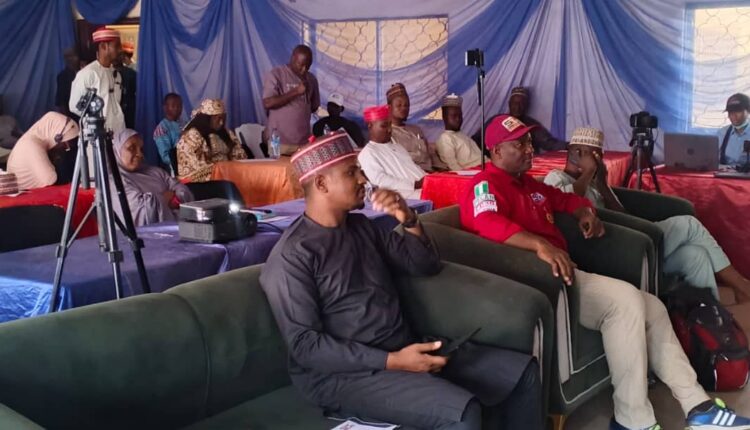
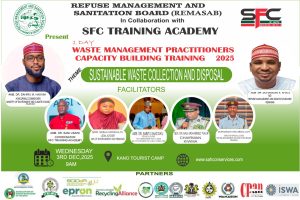
The Refuse Management and Sanitation Board (REMASAB) and Sahcon Fumigation and Cleaning Services (SFC) have collaborated to train waste management practitioners in Kano as part of efforts to promote sustainable waste collection and disposal.
The One-Day capacity building workshop for Private Sector Participants (PSPs) and waste management stakeholders, with a theme “Sustainable waste collection and disposal,” took place in Kano on Wednesday.
Read Also: Flood: NEMA, SEMA sensitise Kano residents on solid waste management
Read Also: Kano showcases Climate Leadership at COP30 side event in Belém, Brazil
The Managing Director of REMASAB, Dr. Muhammad Khalil, said the state government had intensified measures to improve waste management through training, strengthened regulations and stricter enforcement of payments for waste services.
He disclosed that REMASAB and private waste operators had agreed to work together to ensure effective implementation of waste management regulations in the state.
According to him, the state government has reviewed franchise agreements with registered waste collection companies and would soon allocate franchise areas to enhance efficient evacuation and disposal of waste.
“Waste management is not solely the responsibility of government; private companies also play key roles across designated zones,” he said.
Khalil identified non-payment for services as a major challenge facing PSPs, adding that the reviewed agreement provides room for strict enforcement.
He said the state had provided litter bins at strategic locations, including State Road, Race Course and Airport Road, but lamented low public compliance.
“Waste management is a collective responsibility. Ignorance is not an excuse. We are intensifying sensitisation through mass media, social media and direct engagement,” he added.
Also speaking, the Managing Director of Sahcon Fumigation and Cleaning Services, Dr. Sani Usaini, emphasised the need for best practices in waste collection, worker safety and recycling integration.
“We can turn any waste into wealth. Nowadays, no waste is useless,” he said.
Similarly, the Chairman of the Kano Indigenous Waste Management Association, Dr. Bala Muhammad, appealed to the government to enforce stricter compliance to ensure residents pay for waste collection services.
He said poor compliance had affected the operations of private companies, noting that in some communities with about 100 households, only 15 to 20 paid for services rendered.
According to him, the charges remain affordable, with operators billing N5,000 to service a 200-litre dustbin four times monthly, depending on waste volume.
Muhammad commended the introduction of mobile courts by the state government, expressing optimism that defaulters would now be compelled to comply.
“With mobile courts in place, it will no longer be business as usual,” he said.

 and Sahcon Fumigation and Cleaning Services (SFC) have collaborated to train waste mana)