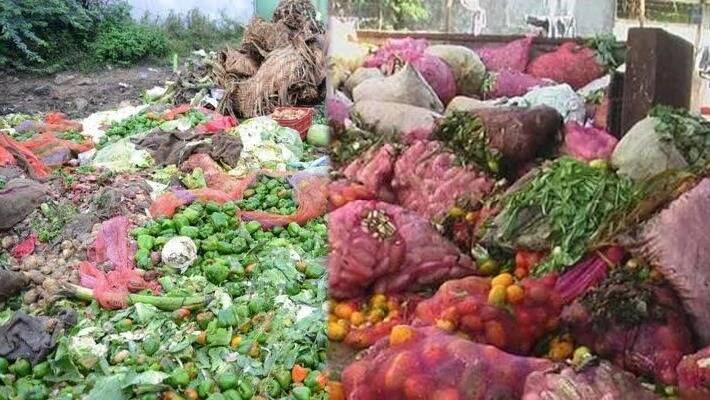
Some farmers in the country have proffered workable solutions to address Nigeria’s growing post-harvest losses estimated at $10 billion annually.
The farmers proffered the solutions in separate interviews on Thursday, April 9, 2026, in Lagos.
Nigeria loses an estimated 30 per cent to 50 per cent of its total annual agricultural output to post-harvest waste.
The losses estimated at approximately ₦3.5 trillion annually, and roughly at $3.7 billion to $10 billion, are majorly driven by poor storage, inefficient transportation, and limited processing capacity.
The most affected post-harvest loss crops include and are not limited to fruits, vegetables, and tubers.
An agriculture analyst and crop farmer, Mr. Omotunde Banjoko, identified bad roads, multiple taxations and poor storage facilities as the major causes of Nigeria’s post-harvest losses index.
“Before now, we used to say Nigeria’s post harvest loss is estimated at about N3 trillion annually, but more recent reports indicate it is about N5 trillion annually. That’s a huge number and that calls for concern for everybody.
“We should look at where does these losses actually occur. It occurs most times because the farmers can’t even move out what they have produced on the farm to the nearest market or to the off takers in good time.
“The state of our roads is a major issue. Most of our farm roads are not good. So, if a farmer produces, no transporter is willing to go there to pick the produce. The ones that even try to pick the produce get stuck because of bad roads.
“We should look at both the local government, the state government and some federal roads. Roads connecting the farms, the production hubs. They don’t need to cost so much for funding, but they can be well graded.
“We need to have good roads so that easily we can move out the produce, the bad roads are a major constraint to resolving post-harvest losses in the country,” Banjoko said.
According to him, another factor that elicits post-harvest losses is the various stops on the roads, while these products are being transported.
“Farmers face a lot of delays due to multiple taxations from security personnel on our roads.
“A truck of vegetables I was personally transporting to Lagos State from Ogun State was stopped by security personnel and we were delayed for more than a day.
“By the time they released my truck in the morning, I just told them to go and dispose of the vegetables because they had gone bad and no longer had the quality to be sold fresh in the market.
“So, we consider the multiple tax, and the frequent stops by local security agencies on the road; they frustrate a lot of farmers which in turn results in post-harvest losses we are currently dealing with,” he said.
He also stressed the need for adequate cold chain storage facilities in various markets in the country.
“We also need adequate cold chain storage facilities in our markets to address post-harvest losses.
“Most markets and off takers don’t have adequate storage facilities or handling equipment that can hold these things fresh for a longer period.
“So, we also have to look at the quality of the processing facilities or holding facilities that we have in our market to be able to hold this produce fresh.
“There are cooling trucks that can be provided to keep agro-produce fresh from the farm gate to the market and the ultimate consumer. There are also mini cooling trucks that can be provided.
“To address our growing post-harvest losses, as a nation, we should start looking at the aforementioned factors both as government and as private investors,” the expert said.
On his part, the Secretary-General of All Farmers Association of Nigeria, Mr. Femi Oke, noted that farmers must collaborate with the government at all levels to address the growing post-harvest losses rate in the country.
“What we have seen mostly as a cause for the increasing post-harvest losses we are experiencing is the negligence on some parts of farmers and the government on preservation of our agriproducts.
“We have concerns over the post-harvest losses of most of our agro-produce and we need to preserve, because mostly we hardly preserve our harvests.
“For example, over the years, we have spoken about the disadvantage of using rafia baskets to transport tomatoes from one part of the country to another but still in 2026 the same baskets are still being used.” ENVIRO News