By Zahraddeen Yakubu Shuaibu
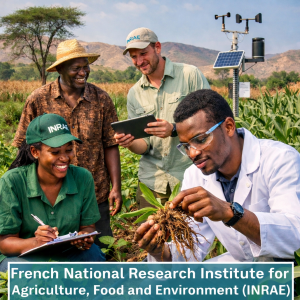
As climate change continues to threaten agricultural productivity across Africa, global research institutions are playing a growing role in shaping solutions. One of such institutions is the French National Research Institute for Agriculture, Food and Environment (INRAE), whose innovations in sustainable farming and environmental management are gaining increasing relevance on the continent.
Established in 2020, INRAE has quickly positioned itself as a global leader in agricultural research. The institute employs over 11,500 staff, including more than 2,000 researchers, and operates across 18 research centres and over 270 research units. Each year, it produces more than 5,700 scientific publications, many of which are developed through international collaboration.
- Meet Dr. Mubarak Mahmud: The genius Nigerian Scientist revolutionizing Forestry Science
- Kano scientist develops ‘Air-to-Fertilizer’ technology to boost crop production
For Africa, where agriculture remains largely rain-fed and vulnerable to climate variability, INRAE’s work offers practical solutions. Farmers across the continent are already experiencing the effects of erratic rainfall, prolonged droughts, and declining soil fertility—factors that threaten both livelihoods and food security.
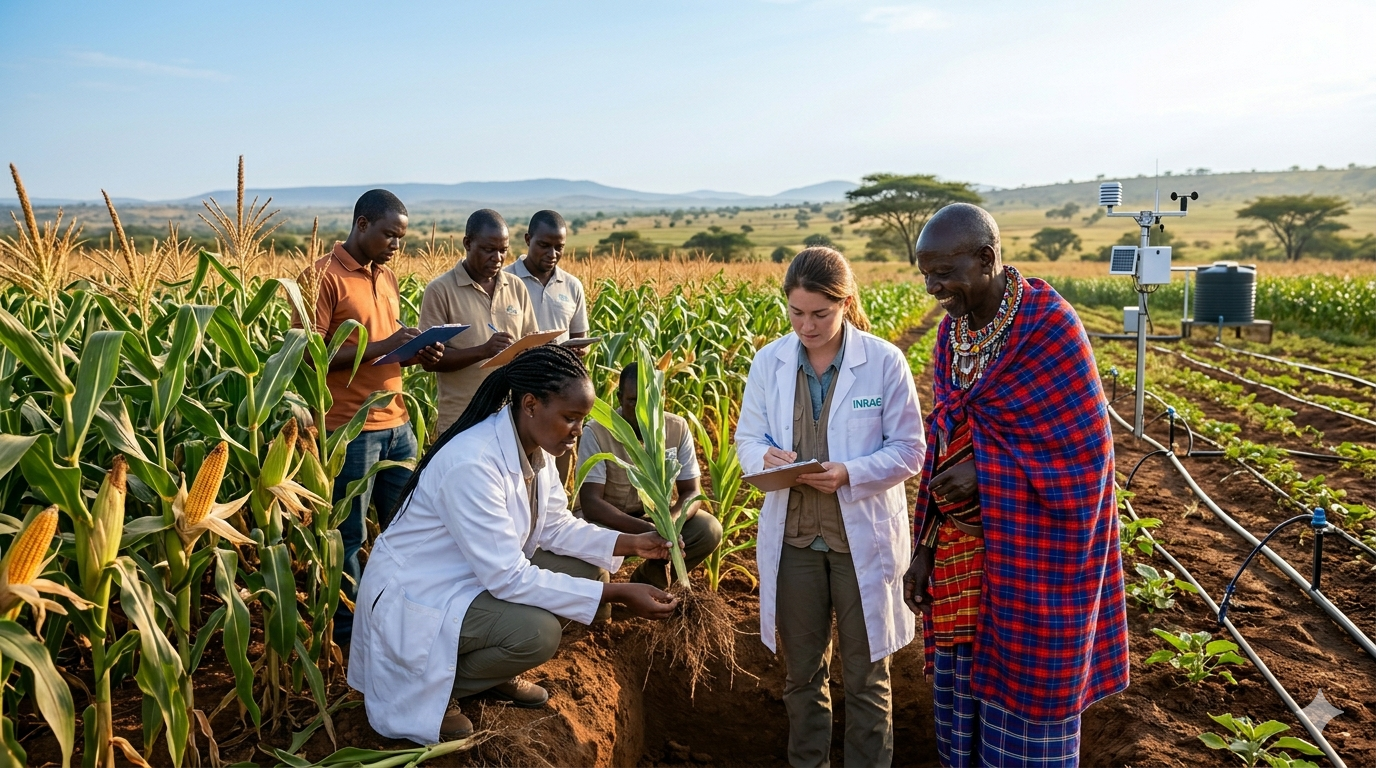
Agro Climate News exclusively gathered that INRAE’s focus on climate-smart agriculture directly addresses these challenges. Its research promotes farming systems that improve productivity while reducing environmental impact. This includes developing crop varieties that can withstand heat and water stress, enhancing soil health, and improving resource efficiency. Such innovations are critical for helping farmers adapt to changing climatic conditions.
A key component of the institute’s work is agroecology, a nature-based approach that integrates ecological principles into farming. By encouraging biodiversity, natural soil regeneration, and reduced reliance on chemical inputs, agroecology provides a cost-effective and sustainable model for smallholder farmers. This is particularly important in Africa, where access to fertilizers and other inputs is often limited or expensive.
Beyond production, INRAE is contributing to strengthening food systems. Its research addresses food safety, nutrition, and post-harvest management—areas that are essential for reducing losses and improving food availability. In many African countries, significant portions of harvested crops are lost due to poor storage and processing, making these innovations highly valuable.
Water management is another critical area of focus. With increasing pressure on water resources, INRAE’s work on efficient irrigation systems, soil moisture conservation, and ecosystem management is helping to ensure that farmers can produce more with limited water resources.
The institute is also actively engaged in international collaboration, working with African universities and research institutions to co-develop solutions and build capacity. These partnerships are vital for ensuring that scientific innovations are adapted to local conditions and can be effectively implemented on the ground.
One of the most notable breakthroughs linked to the institute comes from Dr. Mubarak Mahmud, whose research has introduced a biological pathway that allows cereal crops to utilise atmospheric nitrogen naturally. This innovation has the potential to significantly reduce reliance on synthetic fertilizers, lower production costs, and improve soil health. For African farmers, particularly those in resource-constrained settings, such a development could be transformative.
For Nigeria and other African countries, the relevance of INRAE’s work is clear. Agriculture remains a key driver of livelihoods and economic growth, yet it faces mounting challenges from climate change and environmental degradation. Access to cutting-edge research and sustainable farming practices will be essential for building resilience in the sector.
As the demand for food continues to rise alongside climate pressures, the role of science and innovation becomes increasingly critical. Through its research and global partnerships, the French National Research Institute for Agriculture, Food and Environment (INRAE) is helping to shape a more sustainable and resilient future for agriculture in Africa.