
By Adam Said Adam, Kano
A high-stakes mid-term review of the Agro-Climatic Resilience in Semi-Arid Landscapes (ACReSAL) project has unveiled a bold new direction for Nigeria’s climate response—one that places conflict resolution, community ownership, and financial discipline at the center of its scale-up strategy.
Far from a routine assessment, the joint World Bank and Federal Government mission is reframing climate intervention in Northern Nigeria as both an environmental and security imperative, with early results showing that restoring degraded land and improving water access can directly ease long-standing resource-based tensions.
- ACReSAL reviews its progress across 19 participating states
- Greening Northern Nigeria: ACReSAL Retreat sparks new drive for Climate Resilience
The review mission, which runs from April 6 to 25, 2026, is now laying the groundwork for Additional Financing that could significantly expand the project’s reach—amid growing evidence that its integrated model is delivering results where conventional interventions have struggled.
Climate Action Meets Conflict Prevention
At the heart of the review is a critical shift in thinking: that climate resilience in fragile regions cannot succeed without addressing the root causes of conflict.
Project leaders say ACReSAL’s interventions—ranging from land restoration to solar-powered water systems—are already reducing friction between farmers and pastoralists by easing competition over scarce resources.
“This is no longer just about restoring land,” a senior official involved in the mission noted. “It’s about stabilizing communities.”
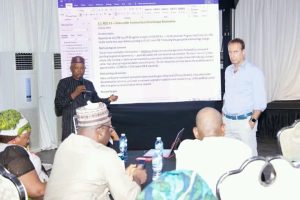
Technical sessions held between April 8 and 10 spotlighted Component B—Community Climate Resilience—as the engine room of this transformation. Unlike other components, it requires deep community participation, making it both the most complex and the most critical.
National Project Coordinator, Abdulhamid Umar, described it as the “make-or-break” element of the entire programme, stressing that sustainability hinges on whether communities truly own the interventions.
A New Discipline for Climate Financing
One of the most consequential outcomes of the review is a tightening of the Community Revolving Fund framework—introducing a mandatory savings period for beneficiaries before accessing funds.
The move is designed to instill financial discipline and ensure long-term viability of grassroots climate investments.
Experts say this marks a departure from traditional aid models toward a more accountable, community-driven financing system.
Smart Agriculture, Smarter Systems
The review is also pushing for modernization across key interventions, particularly irrigation. Plans are underway to deploy a Management Information System that will support Results-Based Financing and accelerate the adoption of solar-powered irrigation technologies.
In parallel, states are being urged to take a more active role in shaping Farmer-Led Irrigation Development initiatives through participatory planning—ensuring that solutions are tailored to local realities rather than imposed from above.
Standardizing Peacebuilding
Another major shift is the integration of conflict early warning systems with grievance redress mechanisms—an effort to streamline responses to emerging disputes and eliminate bureaucratic delays.
By standardizing reporting and response frameworks, the project aims to create a more agile system capable of preventing conflicts before they escalate.
Following strategy sessions in Abuja, the mission is moving to frontline states—Katsina and Kaduna—where field assessments will provide real-time validation of reported gains.
The final phase in Lagos will consolidate findings into a roadmap that could define Nigeria’s next generation of climate resilience programming.