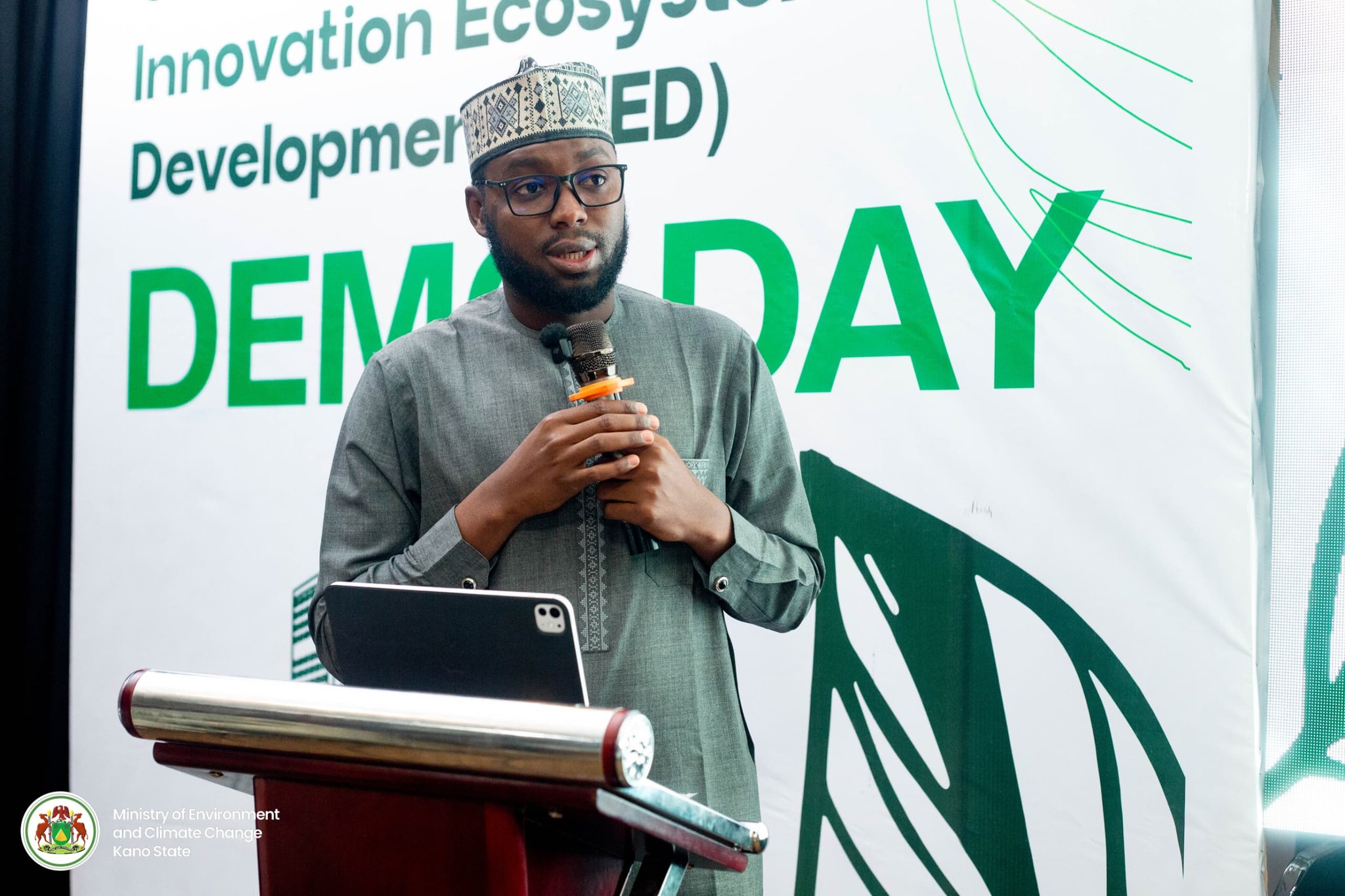
The Kano State Government has reaffirmed its commitment to scaling climate-smart innovation, pledging financial and institutional support to emerging startups at a major green investment pitch event aimed at accelerating practical solutions to environmental challenges.
Speaking at the CIED Green Investment Pitch Event organised by the Startup Kano Centre for Innovation Development in partnership with the Partnership for Agile Governance and Climate Engagement, the Commissioner for Environment and Climate Change, Dr. Dahir M. Hashim, said the state is actively positioning itself as a hub for climate investment.
- ENVIRONMENT: Kano mobile court fines bakery, sachet water factory, others for poor sanitation
- Environmental Protection: Kano Moves to Update 67-Year-Old Forestry Laws
The event showcased a range of climate-smart solutions spanning waste management, sustainable agriculture, and clean energy—developed by local startups seeking to move from concept to implementation.
Dr. Hashim noted that the quality and investment readiness of the solutions reflect the growing strength of Kano’s climate governance framework, driven by the State Climate Change Policy and ongoing climate finance readiness efforts.
“These startups are not operating in isolation,” he said. “They are products of a coordinated system that aligns policy, capacity development, and enterprise support.”
He cited a practical example of impact: one of the participating startups is already utilising government-backed infrastructure at the Dorayi Compost Plant, demonstrating how public investment is enabling real-sector application of climate innovations.
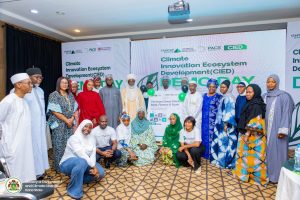
The Commissioner announced that, on behalf of the Governor of Kano State, the government would provide a token of support to all participating startups to help advance their solutions beyond pitch stage.
Agro Climate News reports that the move signals a broader strategy to bridge the gap between innovation and implementation—one of the key barriers facing climate entrepreneurship in Nigeria.
Experts say such interventions are critical as subnational governments increasingly play a frontline role in climate action, particularly in regions like Northern Nigeria where environmental pressures—ranging from land degradation to erratic rainfall—continue to threaten livelihoods.