


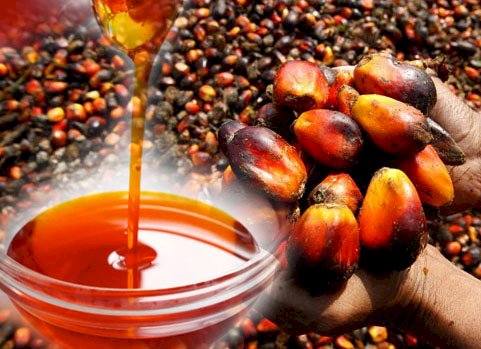
The National Palm Produce Association of Nigeria (NPPAN) says the country will achieve self-sufficiency and meet its global market share in oil palm production by 2050.
The association made this known in Abuja on Saturday, April 4, 2026, noting that the goal is achievable through effective implementation of the National Oil Palm Development Strategy.
- Kano partners Saudi Arabia on date palm initiative to boost climate resilience
- Jigawa govt distributes over 200,000 date palm seedlings, launches green economic initiative
Mr. Alphonsus Inyang, National President of NPPAN, disclosed this during an interview on the sidelines of the National Oil Palm Development Strategy validation meeting.
According to him, Nigeria’s current production capacity of between 1.4 million and 1.5 million metric tonnes annually is projected to rise to between nine million and 10 million metric tonnes by 2050.
Inyang, who also serves as Vice Chairman of the Technical Working Group for the development of the strategy, emphasised that empowering smallholder farmers would be key to boosting production.
He further explained that the strategy includes expanding oil palm cultivation to states such as Taraba, Niger and Kogi.
“Taraba, with its vast landmass of about 69,000 square kilometres, is well positioned for oil palm cultivation, even more than the entire southern region. The state also enjoys longer sunshine hours and has water resources in some areas,” he said.
He added that leveraging northern states forms part of broader efforts to meet the 2050 self-sufficiency and global market targets.
Inyang said the strategy is designed to reposition Nigeria as a major player in the global oil palm industry.
He explained that the framework would include the establishment of a National Oil Palm Council, an Oil Palm Development Fund and a National Smallholders Development Fund.
According to him, the Nigerian Institute for Oil Palm Research (NIFOR) will be transitioned into a Nigerian Oil Palm Board to oversee research, development and innovation in the sector.
He expressed concern over Nigeria’s global ranking as the fifth-largest oil palm producer, despite being Africa’s leading producer, importer, exporter and consumer of palm oil.
Inyang attributed the sector’s slow growth to poor investment and the absence of a clear governance structure, resulting in a fragmented system without a central regulatory authority.
“Governance architecture is key to driving the sector. The new strategy will introduce a structured system similar to what is obtainable in Malaysia and Indonesia,” he said.
He added that the proposed Oil Palm Development Fund would manage 25 per cent of tariffs collected on palm oil, among other funding sources.
“With this framework, the government has created an enabling environment for growth. Private sector players and investors are encouraged to take advantage of the policy,” he said.
Also speaking, Dr. Fatai Afolabi, Managing Consultant at Foremost Development Services, said the mission is to build a sustainable palm oil industry that ensures self-sufficiency, competitiveness and inclusive production.
He noted that the strategy would adopt a hybrid development model integrating large-scale estates with smallholder farmers through sustainable practices, research and efficient supply chains.

 says the country will achieve self-sufficiency and meet its global market share in)