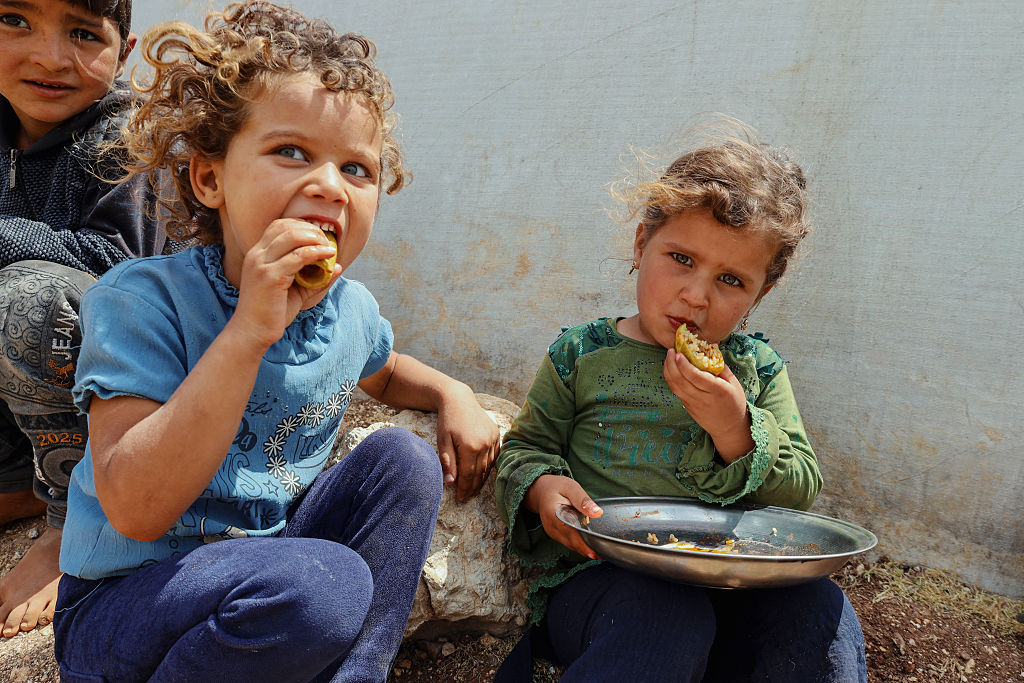
More than 80 percent of households in Syria are unable to consistently access sufficient and nutritious food, according to a new report by the Food and Agriculture Organization and the World Food Programme.
The findings show that hunger has shifted from an emergency condition to a persistent reality for millions, despite a relative decline in conflict intensity.
- FEATURE: Issues as FG bans plastic bottles, Styrofoam packs in MDAs
- NEMA partners UN World Food Programme to tackle hunger, food Insecurity
While humanitarian assistance continues to support large segments of the population, it remains insufficient to reverse widespread food insecurity, with eight in ten Syrians lacking reliable access to adequate meals.
Recent data from the World Food Programme indicates slight improvements, with food-secure households rising from 11 percent in 2024 to 18 percent in 2025.
However, the majority of the population still struggles to meet basic nutritional needs.
Children remain among the most affected. Around 600,000 children under five suffer from acute malnutrition, including 177,000 severe cases, while more than 690,000 experience stunted growth. Access to nutrition services is also limited, with fewer than 25 percent of Syrians able to obtain essential care such as screening and treatment.
The crisis extends beyond food availability to diet quality, as most families rely heavily on low-cost staples like grains and legumes, with limited access to protein-rich and nutrient-dense foods due to rising prices and declining incomes.
Humanitarian operations continue at scale but face major funding constraints.
In January 2026, the World Food Programme reached 6.7 million people with food aid and provided cash assistance to support household purchasing power. However, about 6.4 million people still require daily food assistance to survive.
Funding shortfalls—partly linked to reduced international support—have disrupted nutrition services, particularly in northern regions.
Hundreds of thousands of children are now at increased risk of malnutrition, while treatment services and health facilities have been scaled back, affecting entire communities.
Economic hardship remains a key driver of the crisis.
According to government estimates, about 80 percent of Syrians live below the poverty line, with incomes far below the cost of living. Even with recent wage increases, most families cannot afford balanced diets, forcing many to rely on minimal meals to survive.over 80% of Syrians face chronic food insecurity — FAO, WFP.
Personal accounts from residents highlight the severity of the situation, with families reporting that they often survive on basic foods such as bread, rice, or lentils, and rarely have access to fruits, meat, or healthcare.