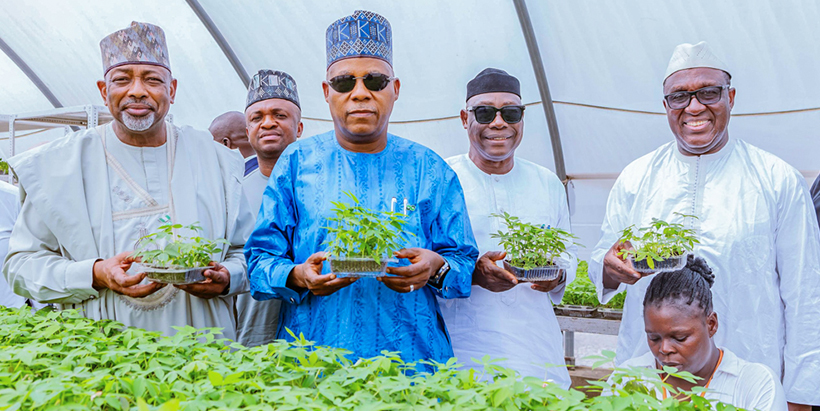
Nigeria is stepping up efforts to confront its deepening food security and climate challenges with the approval of 57 improved crop varieties, a move experts say could significantly raise farm productivity while unlocking thousands of green jobs.
The newly approved varieties—tailored for early maturity, higher yields, and resistance to pests and erratic weather—are being positioned as a critical response to the growing impact of climate change on agriculture across the country.
Stakeholders say the development signals a shift toward climate-resilient farming systems, but warn that without rapid farmer awareness and large-scale adoption, the impact could remain limited.
The All Farmers Association of Nigeria (AFAN), Lagos State Chapter, described the approval as a “timely intervention” as farmers grapple with declining yields linked to unpredictable rainfall patterns, rising temperatures, and soil degradation.
Chairman of the association in Lagos, Sakin Agbayewa, said the focus must now move beyond policy to practical access.
“Food security today is no longer about how much land you have, but the quality of what you plant,” he said.
“Improved seed varieties are the foundation of higher productivity, especially in a climate-stressed environment.”
Nigeria’s agriculture sector—largely rain-fed and dominated by smallholder farmers—has been increasingly vulnerable to climate shocks. Analysts say improved seed systems remain one of the fastest and most cost-effective adaptation strategies available.
The new varieties span key staples including rice, maize, yam, soybean, and plantain—crops central to national food security and rural livelihoods.
However, farmers warn that awareness gaps, weak extension services, and limited access to inputs could slow down adoption.
Agbayewa stressed the urgency of nationwide sensitisation campaigns, noting that many farmers remain unaware of the new varieties.
“You cannot talk about climate resilience without putting the right seeds in the hands of farmers,” he said.
“Government must go beyond approval and ensure these innovations reach the grassroots.”
Climate-smart agriculture seen as pathway to jobs, economic resilience
Beyond crop improvement, experts are pointing to broader opportunities within climate-smart agriculture to tackle Nigeria’s rising youth unemployment and rural poverty.
In Anambra State, stakeholders say a coordinated investment in climate-smart farming and bamboo value chains could generate over 20,000 jobs while restoring degraded lands and boosting rural incomes.
The projection was unveiled at a policy dialogue themed “Sowing Seeds, Growing Future,” where development experts outlined a roadmap for transforming agriculture into a green growth engine.
Agriculture specialist, Dr. Forster Ihejiofor, said climate-smart agriculture—anchored on productivity, adaptation, and emissions reduction—offers a practical pathway to economic diversification.
“This is not just about farming; it is about building resilient rural economies,” he said.
“If properly implemented, this strategy can reduce erosion, create jobs, and open export opportunities.”
Central to the proposal is the development of bamboo as a “green gold” resource, with applications ranging from land restoration and construction to renewable energy and international trade.
Experts say bamboo’s fast growth and environmental benefits make it a strategic asset in Nigeria’s climate response, particularly in erosion-prone regions. ENVIRO News