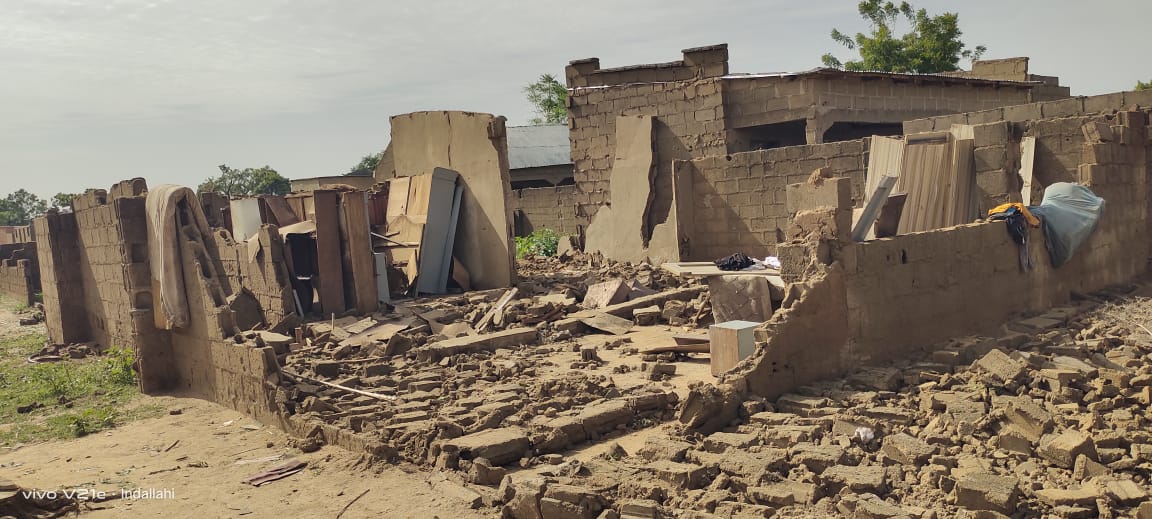
A powerful windstorm accompanied by torrential rainfall has left a trail of destruction across parts of Dutse, the Jigawa State capital, damaging an estimated 3,500 houses, crippling local businesses and exposing the growing vulnerability of communities to extreme weather events.
The storm, which struck on Saturday night, swept through Kwaimawa, Dan Masara, Rungumau, Takur Aduwa and several surrounding communities, tearing off rooftops, collapsing buildings and displacing hundreds of families.
- Flood Preparedness: Jigawa Empowers Riverine Communities to Protect Waterways
- Jigawa Approves N273m Greenhouse Project to Boost Youth Agribusiness Development
Findings by Agro Climate News during visits to the affected areas revealed widespread devastation. Residential buildings were either partially or completely destroyed, market stalls flattened, trees uprooted and electricity infrastructure severely damaged.
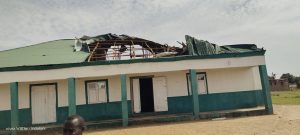
Parts of the Dutse Royal Hotel around Takur Aduwa were also affected, while several homes in nearby neighbourhoods lost their roofs entirely.
Residents described the incident as one of the most destructive storms witnessed in recent years.
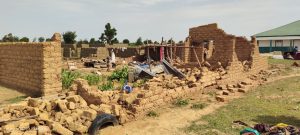
In Kwaimawa, one of the hardest-hit communities, over 200 houses and rooms were destroyed or badly damaged.
A resident, Adamu Abdullahi, recounted the terrifying moment the storm struck.
“We experienced a terrible windstorm accompanied by heavy rainfall that night. More than 200 houses and rooms were destroyed in this community alone,” he said.
Abdullahi added that critical infrastructure was also affected.
“The storm damaged our solar-powered water facility serving over 3,000 residents. Many mosques were also affected, including our Juma’at mosque whose roof was blown away.”
Other residents described how roofing sheets, wood and debris were hurled through the air, crashing into buildings and vehicles.
“Some containers used as shops were lifted and carried away by the wind. We searched for them and could not immediately find them,” another resident said.
“Trees were broken, animals died, others were injured, and many people also sustained injuries.”
Several houses reportedly collapsed while occupants were still inside, triggering frantic rescue efforts by neighbours.
“In some cases, buildings collapsed after the roofs were blown off, with people inside. It was chaos everywhere,” a resident added.
Despite the scale of destruction, residents said there had been no confirmed loss of life as of the time of filing this report.
Livelihoods in Ruins
Beyond the destruction of homes, the storm dealt a heavy blow to livelihoods, particularly small-scale traders and informal businesses that form the backbone of the local economy.
Containers used as shops were either destroyed or displaced, while goods worth millions of naira were lost.
Ladiyo Alhaji Abudu, a furniture dealer, lost merchandise after a structure collapsed on his shop.
Kabiru Haladu, who operates a container shop where he charges mobile phones, was inside when the storm struck.
“The wind lifted the container and damaged customers’ phones along with my equipment,” residents said.
For Malam Baba, the storm swept away his business container entirely. It was later found badly damaged and reduced to scrap.
Across affected communities, vehicles were seen crushed under fallen roofing sheets and wooden beams, further compounding losses.
Personal Stories of Loss
Rabiu Ya’u, a resident, lost his home valued at millions of naira after its roof was completely blown away while his family was inside.
Hussaini Muhammad Ahmed’s case is particularly heartbreaking. Residents said he had travelled abroad and consistently sent money home to build his family house.
“He struggled abroad to build that house. Now, almost nothing is left,” a neighbour said.
Another victim, Kandiya Kwaimawa, reportedly sold farmland to finance her home, only for it to be destroyed by the storm.
Shamsi Abdullahi also lost his house, with little left to salvage.
One of the most emotional incidents involved Ashiru Abdulkarim. His wife had just given birth and was away for postnatal care when the storm destroyed their home.
The family, residents said, had been preparing to return with their newborn baby—only to find their house gone.
Government Response
The Jigawa State Emergency Management Agency (SEMA) said it has commenced assessment of the affected communities.
The Director of Planning, Bala Muhammad Garingabas, confirmed that the agency is working to determine the number of affected households and the scale of support required.
“We have intensified sensitisation campaigns across local government areas following the onset of the rainy season,” he said.
According to him, the state government has already procured relief materials and made arrangements for the distribution of building supplies.
“Cement and roofing sheets will be provided to verified victims after assessment,” Garingabas added.
Climate Signal: Growing Risk to Communities and Agriculture
The incident underscores a growing pattern of extreme weather events across northern Nigeria, raising concerns for both human settlements and agricultural systems.
Windstorms of this magnitude not only destroy homes but also disrupt farming activities, damage storage facilities and weaken rural economies.
Experts warn that increasing climate variability is contributing to more intense storms, erratic rainfall and stronger winds, particularly during the rainy season.
For farming communities, such events can lead to crop losses, soil erosion and destruction of irrigation and water infrastructure.
In Kwaimawa, for instance, the destruction of a solar-powered water facility highlights how climate shocks can undermine critical rural infrastructure that supports both domestic use and agriculture.
Smallholder farmers, who often invest savings from harvests into housing and small businesses, are especially vulnerable. When disasters strike, they lose both shelter and income sources simultaneously.