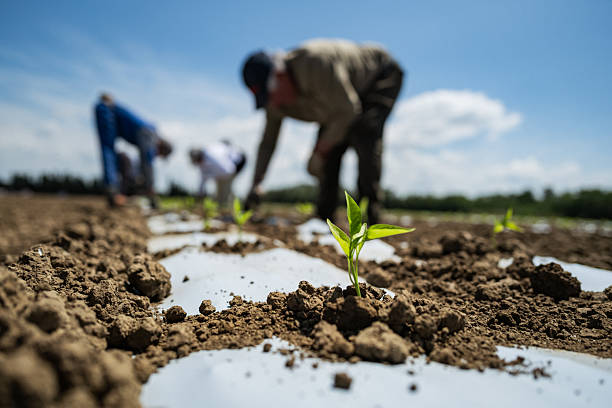
Farmers in the Federal Capital Territory (FCT) and surrounding areas have expressed mixed reactions to the current planting season, citing favourable rainfall alongside rising costs of farm inputs as key factors shaping their production plans.
In separate interviews with the News Agency of Nigeria (NAN) on Tuesday in Abuja, the farmers noted that while the early onset of rains had encouraged cultivation, the increasing prices of seeds, fertilisers, agrochemicals and labour pose serious challenges.
- Senator Barau to distribute 53,040 bags of fertiliser free to farmers, others in Kano North
- EXCLUSIVE: Despite odds, Northern Nigerian women thrive through backyard poultry farming
A vegetable farmer, Blessing Emenike, said the sharp rise in fertiliser prices has forced many farmers to scale down their operations.
“Last year, a bag of fertiliser sold for about N32,000, but this year it is about N50,000, making it unaffordable for many farmers,” she said, adding that seed prices have also doubled.
She called on the government to subsidise agricultural inputs to ease the burden on farmers and boost production.
Similarly, a maize farmer in Dutse Alhaji, Williams Abalaka, said he had begun planting following the rains, which have helped soften the soil, though heavy downpours have occasionally disrupted farming activities.
He also raised concerns about erosion due to poor drainage systems and insecurity, noting that fear of kidnapping has discouraged some farmers from going to their farms.
“Many farmers now prefer using poultry droppings as a cheaper alternative to fertiliser,” he added, stressing that high input costs remain the biggest constraint to expanding cultivation.
In Dei-Dei, rice farmer Aisha Abubakar said she had reduced her farm size due to the high cost of fertilisers, herbicides and labour.
“If the government can subsidise inputs and provide accessible loans, farmers will be able to produce more food,” she said.
Another farmer, Abdullahi Suleiman, expressed concern about unpredictable rainfall patterns, warning that prolonged dry spells could affect crop germination and yield.
“Farming depends largely on rainfall. While many have started planting, we are closely monitoring weather conditions,” he said.
Victoria Obadiah noted that farmer preparedness has improved compared to previous years due to increased awareness and training programmes. However, she warned that rising input costs could limit productivity if adequate support is not provided.
She emphasised the need for climate-smart agricultural practices and urged farmers to utilise weather forecasts and extension services to reduce risks and improve yields.
The farmers collectively called on government and development partners to strengthen support programmes, improve access to quality inputs, and provide modern farming equipment.
They expressed optimism that with favourable weather and adequate support, agricultural production could increase, improving food availability and affordability across the country.
However, they stressed that rising input costs, insecurity and changing rainfall patterns remain major threats to a successful harvest this season.