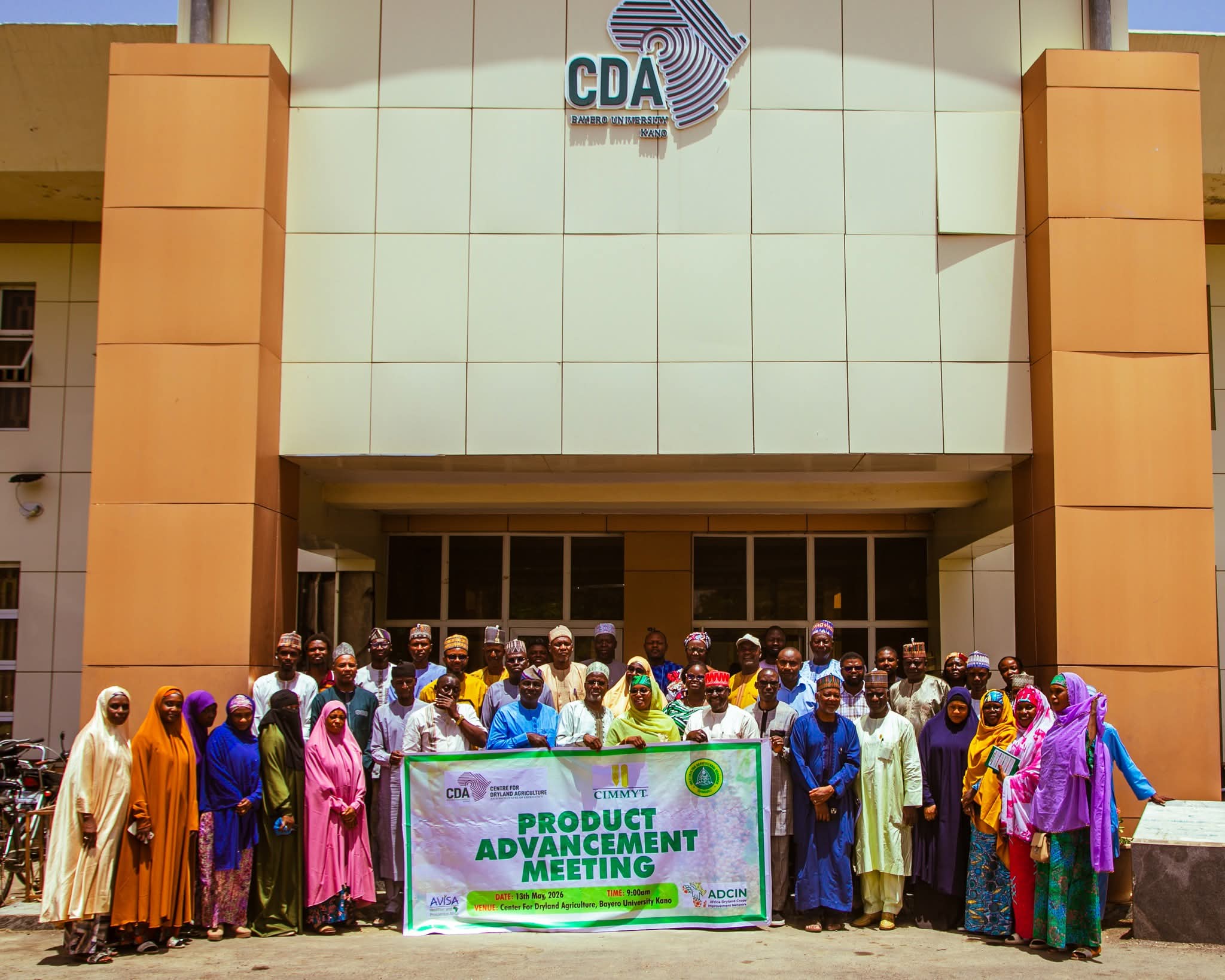
Stakeholders in Nigeria’s agriculture sector have intensified efforts to boost food security and climate resilience, as the Centre for Dryland Agriculture (CDA) convened a high-level meeting to advance improved crop varieties suited for dryland farming systems.
The two-day Product Advancement and Planning Committee meeting, held in collaboration with the Lake Chad Research Institute, Maiduguri, and the Institute for Agricultural Research (IAR), Samaru, is bringing together researchers, seed companies, processors, development partners, and farmers under the Dryland Crops Project framework.
- CDA hosts farmers’ training on adoption of agricultural biotechnology crops
- NBMA orders suspension of new GM cotton varieties in Nigeria
At the heart of the deliberations is the urgent need to identify and promote high-performing, climate-resilient varieties of key staple crops such as sorghum, millet, and groundnut—crops that are critical to livelihoods across Nigeria’s semi-arid regions increasingly impacted by climate variability.
The meeting, which commenced on Tuesday, is reviewing progress made since the last Project Development Team session, with a focus on evaluating late-stage “gate trials”—a crucial step in determining which crop varieties are suitable for release to farmers.
Speaking at the opening, the Director of CDA, Professor Sanusi Gaya Mohammed, said the initiative comes at a critical time when farmers are grappling with erratic rainfall, rising temperatures, and declining soil fertility.
He expressed optimism that decisions taken at the meeting would not only accelerate the release of improved crop varieties but also strengthen agricultural productivity and resilience in dryland areas.
“This platform provides an opportunity to align research outputs with farmers’ realities, ensuring that only adaptable, high-yielding, and climate-resilient varieties are advanced for release,” he said.
Participants at the meeting emphasized the importance of bridging the gap between research and adoption, noting that improved seeds must be accessible, affordable, and tailored to local conditions to make meaningful impact.
Goodwill messages from key stakeholders reinforced the need for stronger collaboration across institutions. Among those who spoke were Rekiya Abdulmalik of the National Agricultural Research System (NARS), Ignatius Angarawai, Country Representative of the International Crops Research Institute for the Semi-Arid Tropics (ICRISAT), and Dr. Doris Puozaa of the International Maize and Wheat Improvement Center (CIMMYT).
Also speaking were the Managing Director of the Kano Agricultural and Rural Development Authority (KNARDA), Faruk Kurawa, and the Managing Director of Dala Foods, Alhaji Ali Madugu, mni, who highlighted the role of private sector actors in scaling improved crop varieties and strengthening agricultural value chains.
With Nigeria’s dryland regions facing increasing climate pressures, stakeholders say the outcomes of the meeting could play a decisive role in shaping the future of cereal and legume production, particularly in the North where millions depend on these crops for food and income.
The meeting is expected to conclude on Wednesday with key recommendations on crop variety advancement and strategies for accelerating their release and adoption among farmers.