


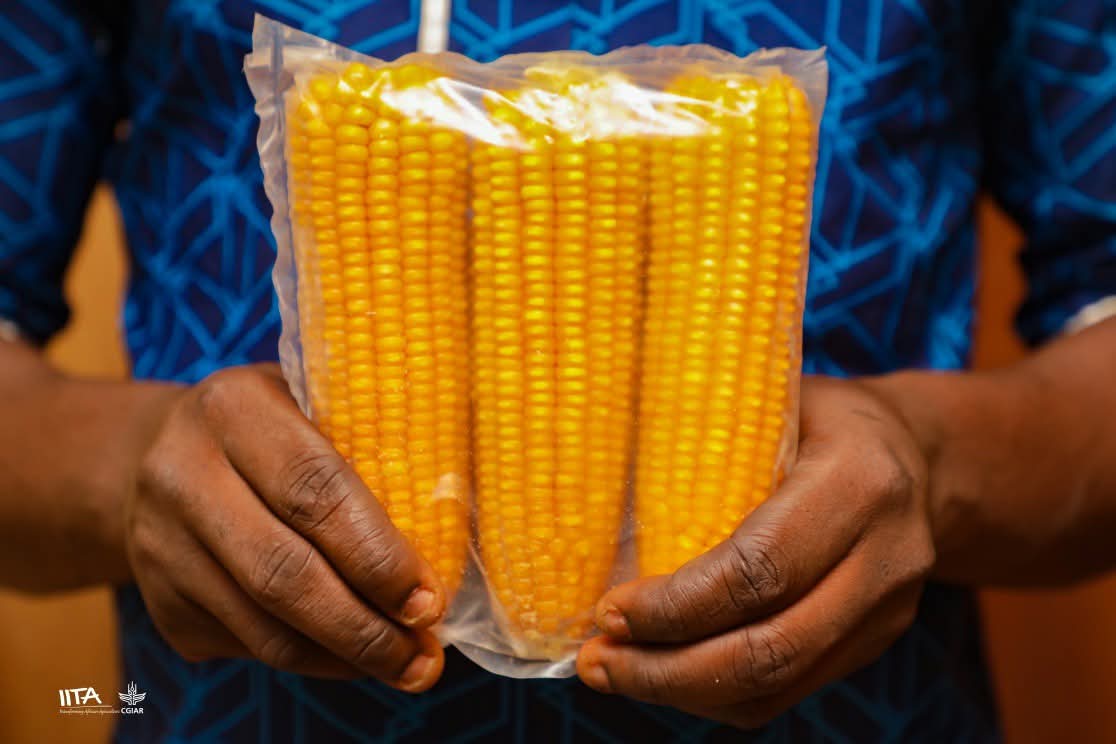
As the world marks World Water Day, the International Institute of Tropical Agriculture (IITA) is spotlighting its climate-smart maize innovations designed to help farmers across sub-Saharan Africa remain productive despite growing water scarcity.
With climate change intensifying droughts and erratic rainfall patterns, smallholder farmers—who depend heavily on rain-fed agriculture—are increasingly vulnerable. In response, IITA has developed and promoted a suite of climate-smart maize solutions that combine drought-tolerant seed varieties, water-efficient agronomic practices, and integrated pest management.
- IITA, UN strengthen partnership to accelerate food security, agricultural transformation in Nigeria
- Cassava, yams, maize ranked top as Nigeria unveils 2023 National Agricultural Sample Survey
According to the institute, the initiative is aimed at ensuring that farmers can “grow more with less water,” while also safeguarding their livelihoods and strengthening regional food security.
“These innovations are not just about improving yields; they are about building resilience in farming systems,” a representative of IITA noted.
The climate-smart maize package enables farmers to cultivate maize successfully even in drought-prone environments, maximize limited water resources through improved farming techniques, and protect their crops against pests and unpredictable weather conditions.
Across several African countries, early adopters of these innovations are already recording improved harvests despite challenging climate conditions. The approach also aligns with broader continental efforts to enhance agricultural sustainability and reduce vulnerability to climate shocks.

 is spotlighting its climate-smart maize)