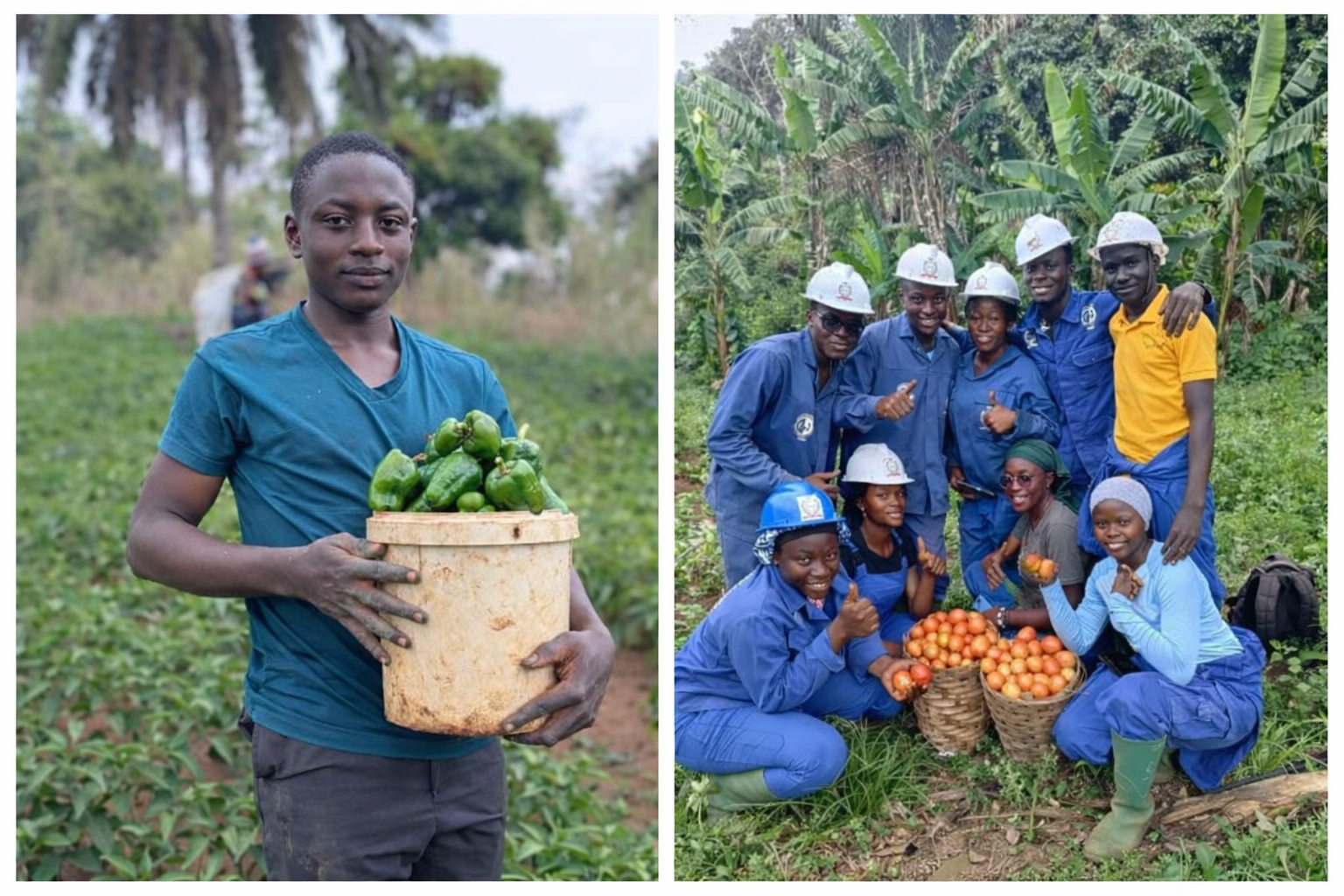
As Africa grapples with the dual challenges of food insecurity and climate change, a new generation of young farmers is emerging—bringing innovation, resilience, and long-term thinking into agriculture. Among them is Nkem Agnongue Ismael, a student from Cameroon whose story reflects the growing shift toward climate-smart and knowledge-driven farming across the continent.
Currently pursuing his studies, Nkem is already applying practical agricultural knowledge to real-life farming decisions—an approach experts say is critical in building a resilient food system in Africa.
- IITA, youth ministry partner to launch Land Trust Fund for young agripreneurs
- EXCLUSIVE: Karfi Corn Market: Where women, youths turn maize into gold
“I still have three years left in school, and I want to use that time wisely,” he said. “It’s not just about learning in class. I need to ask questions, engage with my professors, and understand how to apply what I learn directly to farming.”
His outlook underscores a broader issue within agricultural education: the need for active learning. In the face of unpredictable weather patterns, soil degradation, and shifting growing seasons, young farmers must go beyond theory to develop adaptive skills that can withstand environmental shocks.
Across many parts of Africa, climate variability continues to affect crop yields, pushing farmers to rethink traditional practices. For Nkem, this reality is shaping his early decisions.
Rather than venturing into high-maintenance crops, he is opting for more resilient and less labor-intensive options such as plantains, cocoa, and fruit trees. These crops not only require less daily attention but are also better suited to long-term investment and changing climate conditions.
“I have access to a small piece of land near my hometown,” he explained. “Since I’m still in school, I can’t manage crops that need daily care like tomatoes or cabbage. So I’m focusing on crops that I can sustain from a distance.”
His strategy also includes collaboration—partnering with someone in his village to manage routine farm activities such as weeding and maintenance. This model of shared responsibility is increasingly being adopted by young farmers who must balance education, employment, and agricultural investment.
Beyond production, Nkem is also thinking financially. He plans to reinvest proceeds from his early farming efforts, building capital gradually over the next three years.
“By the time I graduate, I want to expand—get more land, invest in equipment, and develop a bigger farm,” he said.
Agricultural experts note that such phased, strategic entry into farming is essential for sustainability. Starting small, minimizing risk, and reinvesting profits can help young farmers build resilience against both economic and climate-related uncertainties.
Nkem’s journey reflects a larger continental trend where youth are redefining agriculture—not as a last resort, but as a viable, profitable, and climate-responsive enterprise. With increasing access to education, digital tools, and agricultural knowledge, young Africans are uniquely positioned to transform the sector.
However, challenges remain. Limited access to land, financing, and extension services continues to hinder many aspiring young farmers. Stakeholders have consistently called for policies that support youth participation in agriculture, particularly in areas of training, funding, and climate adaptation.
For now, Nkem represents a hopeful example of what is possible when knowledge meets planning and determination.
As Africa continues to navigate the impacts of climate change, stories like his highlight the importance of investing in youth-led agricultural transformation—one small farm at a time.
Agro Climate News will continue to follow Nkem’s journey and explore the climate-smart techniques shaping the future of agriculture across Africa.