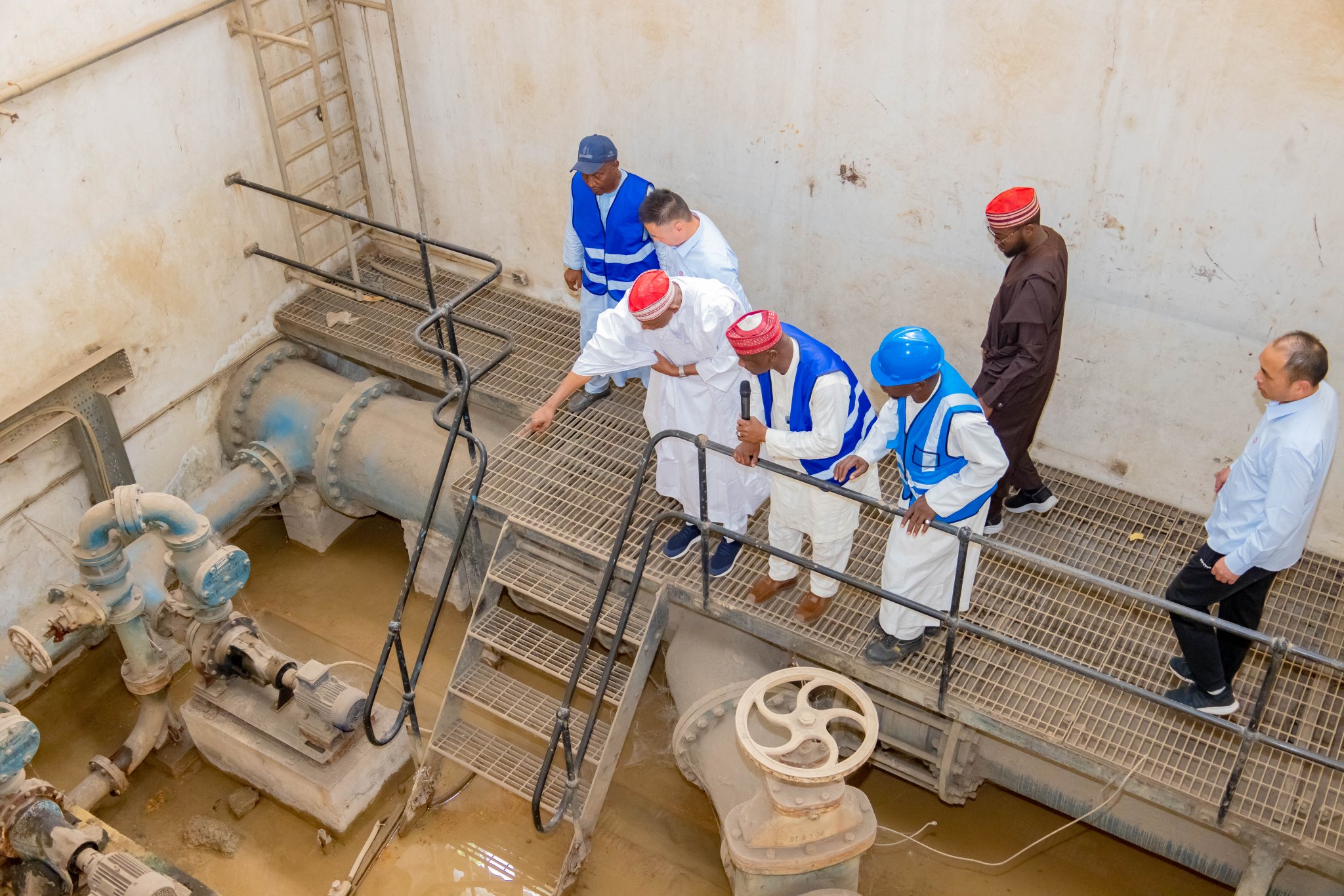
The Kano State Government has identified a significant shortfall in water supply following an on-site assessment of the Challawa Water Treatment Plant, a key facility expected to serve millions of residents.
The inspection, led by Abba Kabir Yusuf and accompanied by senior government officials, revealed that the plant is currently producing only about 70 million litres of water per day—far below its installed capacity of 220 million litres.
Acting Commissioner of Water Resources, Dahir M. Hashim, said the gap highlights urgent operational challenges that must be addressed to improve water access across the state.
According to him, the visit forms part of a broader statewide assessment of major water infrastructure aimed at identifying inefficiencies and restoring optimal performance.
“The assessment has provided a clearer understanding of the operational gaps. Efforts will now be directed toward improving performance and strengthening water supply to affected areas in a structured and sustainable manner,” Hashim stated.
The development comes amid renewed focus by the state government on critical sectors, including water, following what officials describe as measurable progress in education, infrastructure, and human capital development.
Water supply remains a major climate and public health concern in northern Nigeria, where rapid urbanisation, population growth, and environmental pressures continue to strain existing infrastructure.
Experts say restoring facilities like the Challawa plant to full capacity could significantly improve access to clean water, reduce reliance on unsafe sources, and enhance resilience against climate-related water stress.
The Kano State Government has yet to announce a specific timeline for the rehabilitation or upgrade of the facility but indicated that interventions would be guided by findings from the ongoing assessments.