The Agro-Climatic Resilience in Semi-Arid Landscapes project has signed the International Institute of Tropical Agriculture as its lead technical partner to accelerate climate-smart farming and land restoration across 19 northern states and the Federal Capital Territory.
A statement by the ACRESAL Communication Specialist, Jane Ozuruoke, said the partnership was formally launched on May 13, 2026, under Component B of ACReSAL, a Federal Government of Nigeria project backed by the World Bank. It targets land degradation, climate vulnerability, food insecurity, and rural poverty by scaling up farmer-led irrigation and sustainable land and water management practices.
- Mid-Term Review: ACReSAL transforms 9.3 million lives, restored 1m degraded land
- Restoring Hope: Zulum, World Bank inspect ACReSAL flood control project in Maiduguri
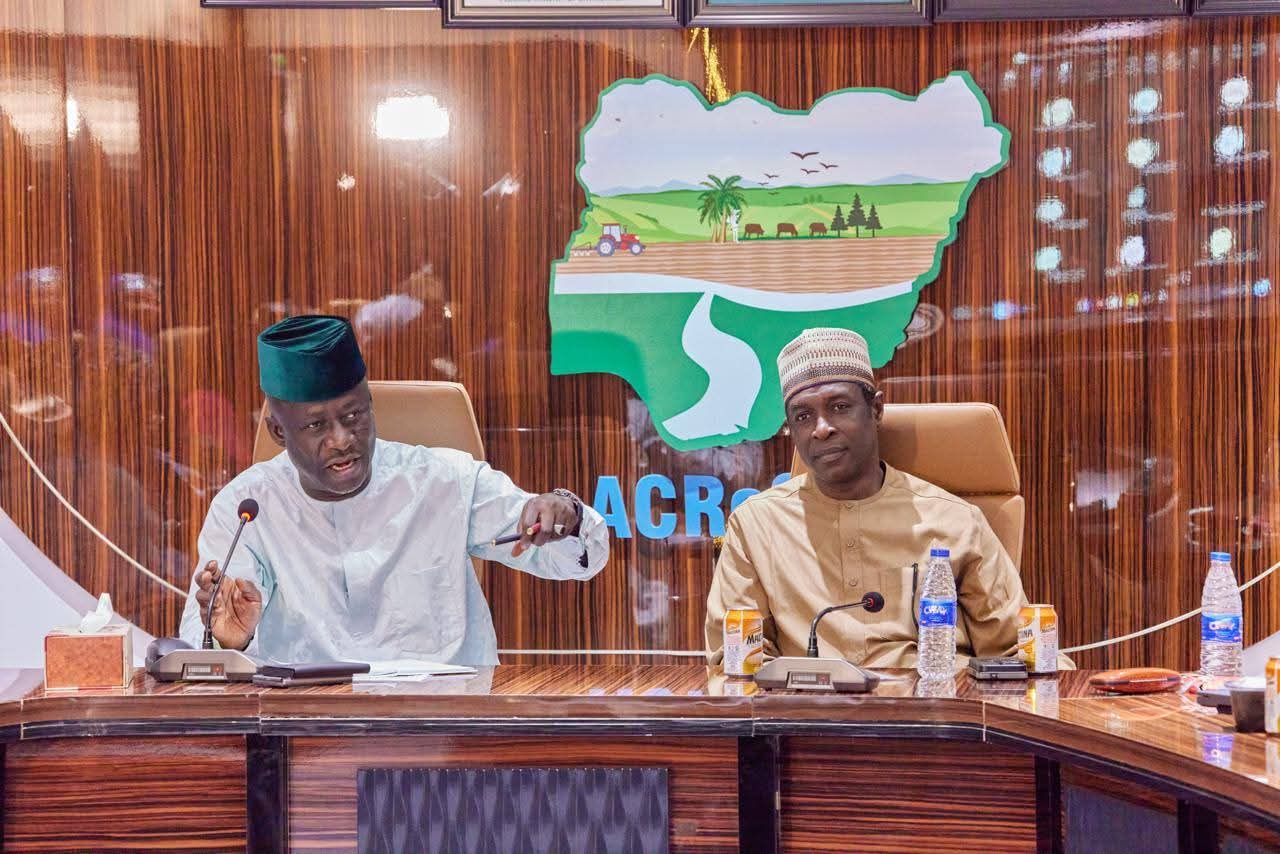
Speaking at the kick-off meeting, ACReSAL National Project Coordinator Abdulhamid Umar said IITA’s role would be to turn research into practical field solutions that farmers can use immediately.
He described the engagement as “strategic and timely,” noting that IITA brings decades of experience in agricultural research, farming systems, soil and water management, and climate resilience technology.
Under the agreement, IITA will support the rollout of climate-smart agriculture and farmer-led irrigation interventions. The institute will also work to strengthen delivery systems at the national and state levels so that farmers and communities see measurable benefits from ACReSAL investments.
Dr. Alpha Yaya Kamara, representing IITA, said the institute would deploy drought-resistant crop varieties, soil health diagnostics, and efficient water-use methods tailored to the semi-arid zones of northern Nigeria.
The work will be carried out alongside extension workers and local stakeholders to ensure the shift to climate-smart practices is culturally appropriate and driven by farmers themselves.
The partnership is built around three expectations: close coordination with Nigerian research and extension agencies to avoid duplication; delivery against clear frameworks, milestones, and reporting requirements set by the Federal Government and World Bank; and a focus on building institutional capacity and knowledge platforms that can sustain results after the project ends.