By Faiza Abubakar Ardo
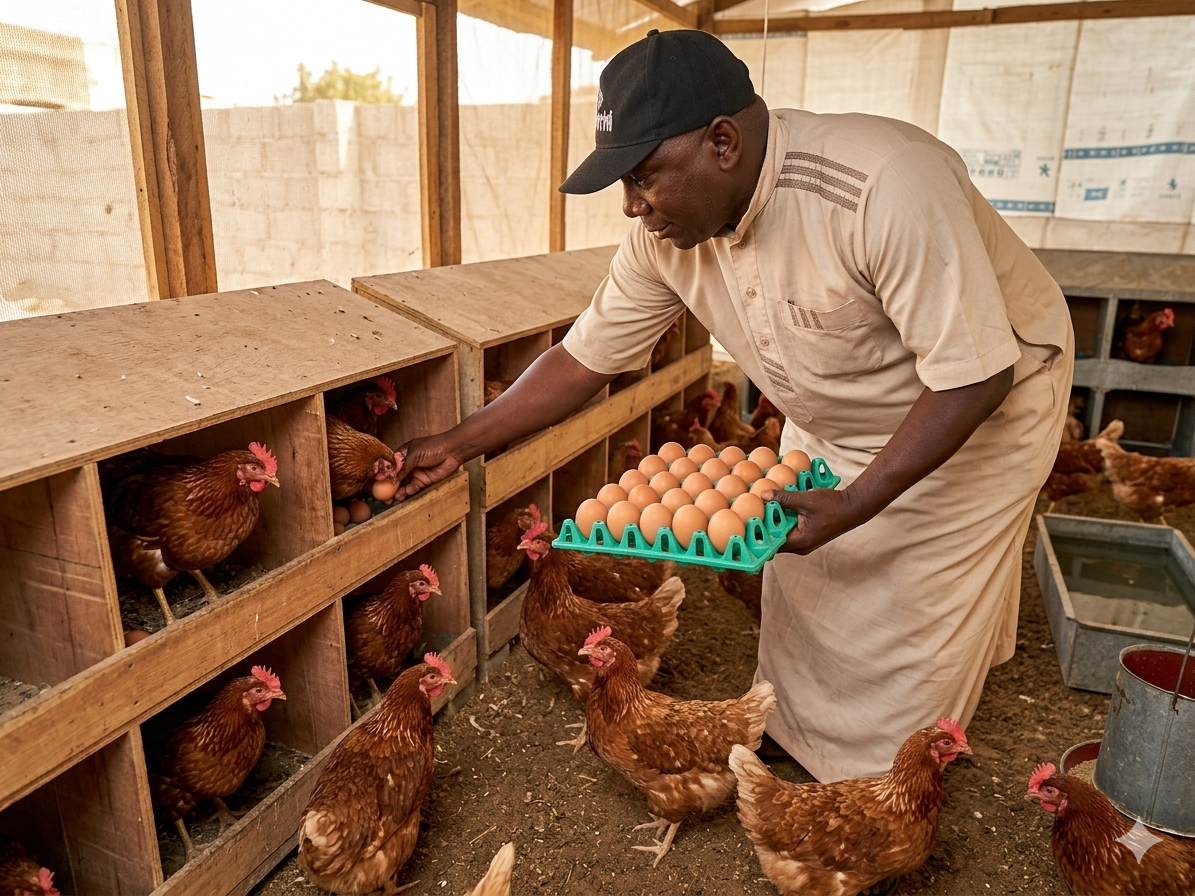
Malam Bala A. Usman is a dedicated poultry farmer whose thriving business produces a minimum of 2,800 eggs daily, with total production across his farms exceeding 3,000 eggs per day. His journey into poultry farming began in Edo State, Nigeria, where he started with just a few chickens before returning to his hometown in Kano State to expand his operations.
In an interview with Agro ClimateNews in one of his farm, Malam Bala said he operates four poultry branches under the name Rano Farm, located in Miltara, Sharada, Rano, and Kurna areas of Kano State metropolis.
- EXCLUSIVE: Inside northern Nigeria’s booming “Jari Bola” plastic recycling economy
- Local farmers skeptical as govt pursues mega poultry project with China
According him, poultry farming remains his sole source of livelihood, and over the past five years, it has significantly transformed his life—enabling him to provide for his family, acquire a house and a car, and meet other financial needs. Beyond that, Malam Bala also employed many people who work under him, as such, earning a means of living.
Agro Climate News gathered that poultry farming has emerged as a cornerstone of economic activity in Northern Nigeria, playing a pivotal role in sustaining the country’s position as Africa’s largest egg producer, with an estimated annual output of 666,000 tonnes. Across key production hubs such as Kano, Kaduna, and Maiduguri, the industry continues to thrive, supported by a high concentration of commercial farms and favourable climatic conditions.
Notably, the region’s dry-cold season provides an optimal environment for poultry production, contributing to a success rate of over 57 percent. This seasonal advantage has encouraged increased investment and expansion within the sector, making egg production one of the most lucrative agribusiness ventures in the region.
However, Malam Bala said despite its profitability, the industry faces significant challenges. Chief among them is the high cost of feed, which accounts for nearly 69 percent of total production expenses. “This rising cost continues to put pressure on farmers’ margins, underscoring the need for sustainable interventions to support growth and resilience in the sector.”
He describes poultry farming as a demanding venture that requires patience, discipline, and constant attention. Managing more than 2,000 chickens daily across four different locations involves ensuring proper feeding, adequate water supply, ventilation, and protection from harsh weather conditions.
“My chicken layers in Sharada are up to 300, and they produce at least 280 eggs daily, which is about nine crates. But across all branches, production exceeds 3,000 eggs every day,” he explained.
Malam Bala noted that not all chickens lay eggs, likening it to human nature where some individuals may not reproduce. Such chickens are often sold or slaughtered, while productive layers are retained for continued egg production.
During the Ramadan period, egg sales are flexible, catering to the needs of buyers such as shop owners, street food vendors, and local residents who may purchase in smaller quantities. However, after Ramadan, he sells eggs in bulk, with a minimum of five crates per transaction. Each crate is sold at ₦6,000.
To ensure efficiency, Malam Bala has trained workers to manage his farms according to his standards. While he visits three of the branches weekly, he personally oversees the Sharada farm due to its proximity to his residence, even though it has the smallest number of chickens.
Feeding, meditation vital to successful poultry farming
Speaking on the feeding angle, the poultry farmer said feeding remains one of the most critical aspects of his operations. “At the Sharada branch alone, chickens consume about 45 bags of layer mash monthly. Across all branches, consumption exceeds 200 bags. Water supply is equally essential, with the Sharada farm consuming about 20 liters monthly, while total consumption across all farms surpasses 70 liters,” he said.
To cope with the region’s hot weather, Malam Bala administers medication every three days, ensures proper ventilation by opening enclosures for fresh air, and protects the chickens from excessive sunlight. He maintains a natural routine by closing operations at 6 p.m. daily without artificial lighting, allowing the chickens to rest and resume feeding in the morning.
Malam Bala describes poultry farming as a profitable and rewarding venture for those who are patient and disciplined.
“Poultry farming is interesting because it brings income. If you manage your earnings well, you will be satisfied,” he said.