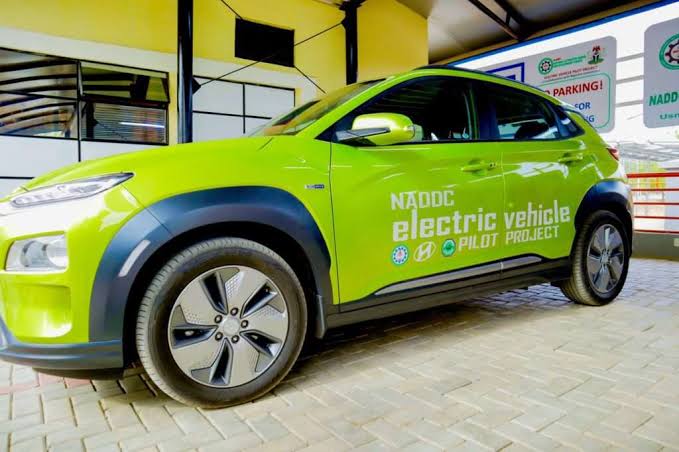
The Federal Government has taken delivery of its initial batch of electric vehicles designated for civil servants, marking the official launch of a broader transition toward cleaner-energy transportation under President Bola Tinubu’s administration.
Director-General of the National Automotive Design and Development Council (NADDC), Mr. Oluwemimo Joseph Osanipin, confirmed the milestone following a briefing with President Tinubu at the Presidential Villa in Abuja.
- South Korea targets 20% renewable power share by 2030
- Experts advocate reforms to strengthen electricity value chain
This delivery represents a foundational step in the government’s strategy to lower transportation costs, reduce carbon emissions, and deepen the overall capacity of Nigeria’s domestic automotive industry.
To support the incoming fleet, the Federal Government has already established electric-vehicle infrastructure across 16 universities nationwide to create an operational ecosystem for alternative-energy transportation.
Osanipin emphasized that the visible impact of these policies will expand alongside ongoing public and private investments in supporting facilities.
He noted that moving away from traditional fossil fuels requires systematic development of charging networks, gas production facilities, mobile refueling units, and dedicated filling stations to ensure long-term sustainability.
Simultaneously, the administration’s Compressed Natural Gas (CNG) initiative is gaining momentum, evidenced by a dramatic increase in licensed gas-retailing firms from just four to 81 nationwide.
Osanipin highlighted that the growing availability of CNG is already driving down travel expenses for early adopters, citing examples where long-distance fuel expenditures dropped by over 75 percent.
Fleet operators and commercial transporters are increasingly utilizing CNG as refueling access expands beyond major commercial hubs into states like Kano.
Despite these cost savings for transport operators, the government acknowledged that lower operational expenses have not yet translated into reduced fares for everyday commuters.
Osanipin stated that the immediate priority remains expanding physical infrastructure and securing adequate fuel supplies across all regions.
Once the supply chain and supporting facilities are fully established, the next phase of the policy will focus on mechanisms to ensure operators pass savings along to the public.
In addition to electric mobility progress, the NADDC briefing covered strategic investments and draft legislation aimed at strengthening Nigeria’s automotive sector.
The proposed legal and regulatory frameworks intend to attract foreign and local investment, boost domestic vehicle assembly, and accelerate green transport technology adoption.
Ultimately, the combined rollout of electric vehicles and CNG infrastructure reflects a concerted effort by the Federal Government to diversify the nation’s transport energy mix, lessen dependence on expensive petrol and diesel, and foster sustainable economic development.