By Ahmad Saleem
The African Agricultural Technology Foundation (AATF) has sought deeper collaboration with the Kano State Government to accelerate the adoption of climate-smart crop varieties aimed at boosting food production and improving farmers’ resilience to climate change.
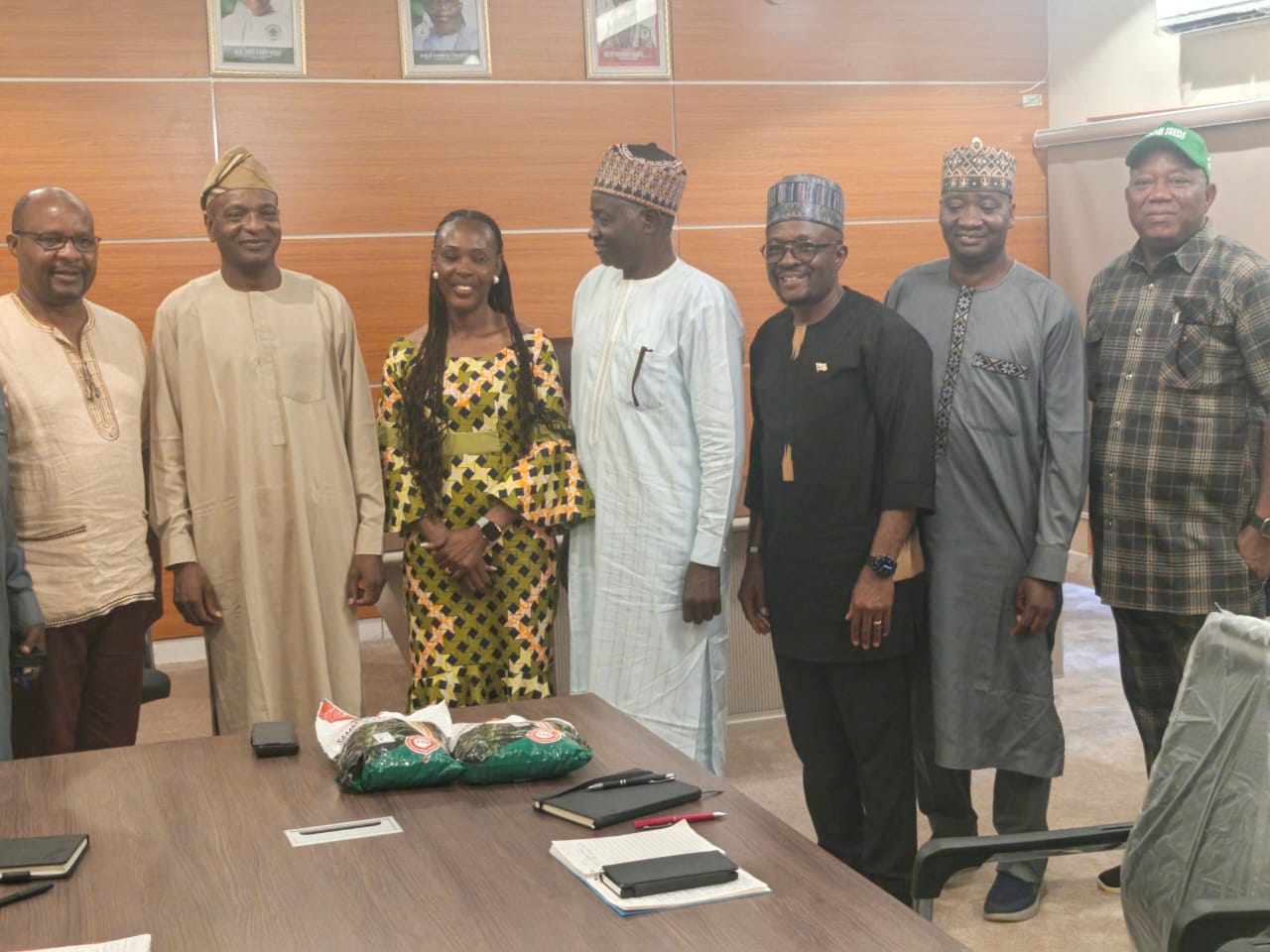
The call was made during a courtesy visit by an AATF delegation to the Kano State Commissioner for Agriculture and Natural Resources, Dr Danjuma Mahmoud, in Kano.
- FG’s N95bn Kano dam upgrade to boost food security – Presidential aide
- Climate change reduces crop nutrition, scientists warn
Speaking during the visit, AATF Board Vice Chairman, Sylvia Kyeyune, commended Nigeria for establishing an enabling regulatory framework for the adoption of agricultural biotechnology and other innovative farming technologies.
She said the country’s biosafety regulations had created opportunities for farmers to benefit from improved crop varieties capable of withstanding the effects of climate change.
Kyeyune noted that unlike some African countries where the absence of biosafety laws had delayed the commercialisation of improved seeds, Nigeria had made significant progress in creating a favourable policy environment.
“I congratulate Nigeria for the progress it has made in creating an enabling environment for agricultural technologies. Without political will and appropriate regulations, farmers cannot benefit from these innovations,” she said.
She cited Uganda as an example of a country that pioneered several agricultural technologies but had struggled to commercialise them because of regulatory constraints.
The AATF official said the foundation was promoting TELA maize, a drought-tolerant and fall armyworm-resistant variety developed to help farmers cope with erratic rainfall and pest infestations.
According to her, field visits in Kano showed encouraging results, with farmers reporting better performance of TELA maize compared to conventional varieties, particularly under challenging weather conditions.
“Climate change is a reality. Rainfall patterns have become unpredictable, and farmers need resilient crop varieties. TELA maize can withstand drought and resist fall armyworm, giving farmers a better chance of harvesting even under adverse conditions,” she said.
Kyeyune appealed to the Kano State Government to support awareness campaigns and policies that would encourage wider adoption of the improved seed among farmers.
She also called for measures to stabilise grain markets, saying farmers would only embrace improved technologies if they were assured of profitable returns on their investments.
Responding, the Commissioner for Agriculture and Natural Resources, Dr Danjuma Mahmoud, assured the delegation of the state’s readiness to strengthen collaboration with AATF in advancing climate-smart agriculture.
He said the state government remained committed to promoting improved seed varieties capable of increasing agricultural productivity and supporting agro-industrial development.
“We are open to every meaningful collaboration that will improve agricultural production in Kano. Our priority is quality seeds that can withstand climate challenges and generate the volumes required to sustain our processing industries,” he said.
Mahmoud explained that the state’s agricultural development agenda, including the Special Agro-Industrial Processing Zones (SAPZ) programme, depends on increased farm productivity driven by improved seeds and modern farming technologies.
He said the government would work with AATF to raise awareness about the benefits of climate-smart seeds while exploring opportunities to integrate the technologies into ongoing agricultural programmes.
The commissioner noted that Kano had already partnered with development organisations and seed companies to support hundreds of thousands of smallholder farmers with improved seeds and climate-smart farming practices.
He added that the state would continue to collaborate with development partners to ensure farmers have access to appropriate technologies capable of enhancing food security, increasing incomes and supplying raw materials to agro-processing facilities across the state.
Mahmoud also urged AATF to submit a detailed proposal outlining areas of collaboration to facilitate the development of a structured partnership between the foundation and the state government.