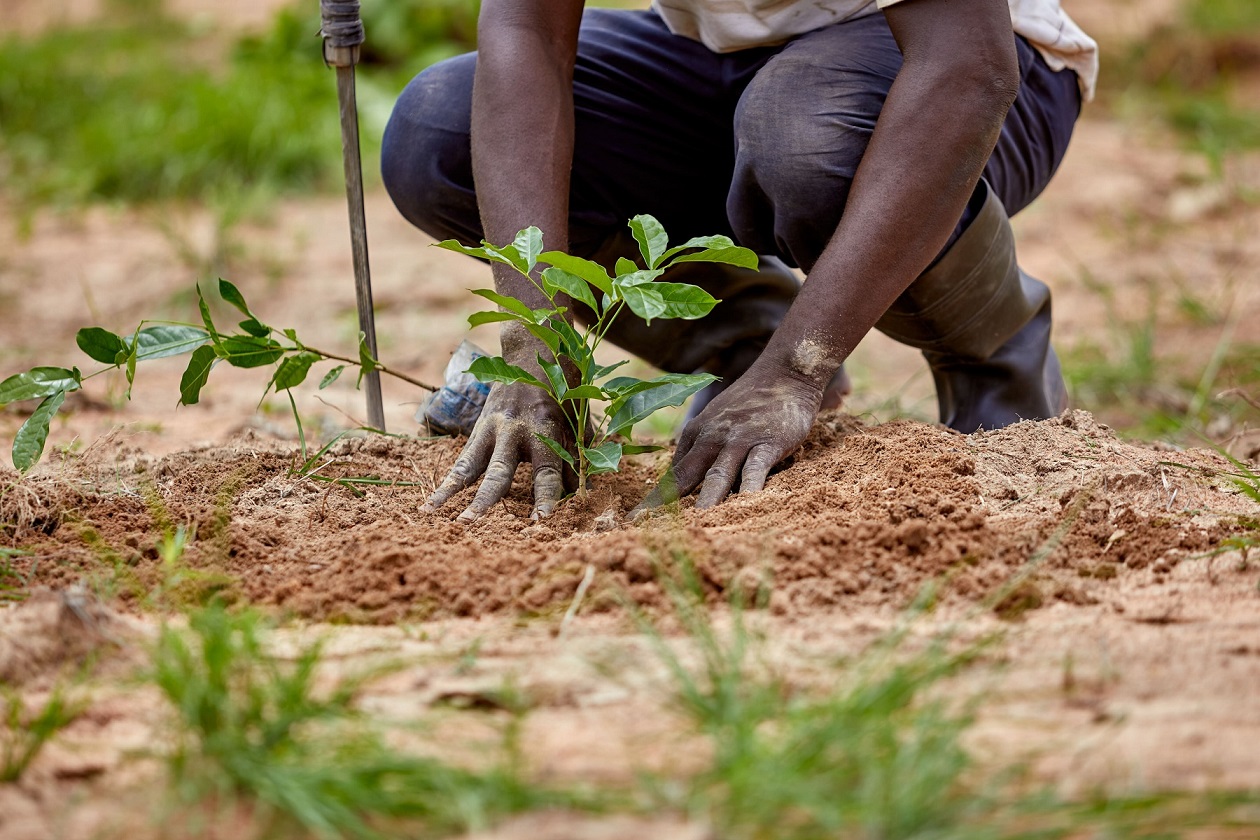
The Centre for Information Technology and Development (CITAD) has called on governments, development partners, philanthropists and members of the public to support its campaign to plant one million trees across Northern Nigeria.
The organisation said inadequate seedlings remained the major challenge slowing the expansion of the campaign, despite growing public demand for trees.
- CITAD Launches One-Year Campaign to Plant One Million Indigenous Trees Across Northern Nigeria
- ABCOAD launches Tree Planting Campaign to green campus, combat climate change
Muhammad Sani Khamees, Senior Programmes Officer, Climate Change, Research and ICT, made the call on Tuesday during CITAD’s first media briefing on the progress of the Plant One Million Trees campaign.
Khamees said 616 trees had so far been planted since the campaign was launched on Sept. 2, 2026, but only 345 had been verified as planted and living.
“The most pressing challenge we face is an inadequate supply of tree seedlings. The volume of requests received from the public far exceeds our current seedling stock,” he said.
He said the shortage was limiting CITAD’s ability to meet requests from communities and expand the campaign.
Khamees also identified inadequate volunteer participation and misunderstanding of the campaign’s verification process as other challenges affecting the initiative.
He said some people had uploaded photographs of already grown trees or groups of seedlings and claimed that they had planted them.
“All those have been disallowed in the system. While people can look at them in our gallery, they are not counted as planted trees,” he said.
According to him, community volunteers are expected to verify reports of planted trees and monitor their condition after planting.
He said 129 volunteers had so far registered, but the volunteer verification mechanism had yet to be activated, leaving many reported trees unverified.
Khamees said the campaign had established four seedling nurseries, two in Kano, one in Dutse, Jigawa State, and another in Jama’are, Bauchi State, to increase the supply of mainly indigenous tree seedlings.
He said the campaign had also secured partnerships with relevant government agencies in Kano, Jigawa and Bauchi states, while media organisations were supporting public awareness through radio programmes.
Khamees said CITAD was using its p1mt.ng platform to document and verify planted trees through GPS tracking and monitoring, reporting and verification mechanisms.
He said the platform would help track planted trees and their survival across intervention sites.
The programme officer said the organisation had received numerous requests for seedlings from communities, describing the demand as an indication of growing public interest in tree planting.
He called on governments across Northern Nigeria to support the campaign through seedling donations, mobilisation of citizens and provision of materials for protecting newly planted trees.
“We call on philanthropies and well-intentioned individuals, including people and organisations in the commercial side of the seedling business, to donate seedlings for the campaign,” he said.
Khamees also called on development partners, climate and environment-focused organisations and relevant agencies to join the initiative.
“We call on development partners, climate and environment-focused organisations, and agencies to join the partnership of the campaign so that together we can re-green the North,” he said.
He said CITAD would continue to work with government agencies, local government nurseries, corporate organisations and individuals to increase the supply of seedlings and sustain the campaign towards its target of one million trees.