By Faiza Abubakar Ardo
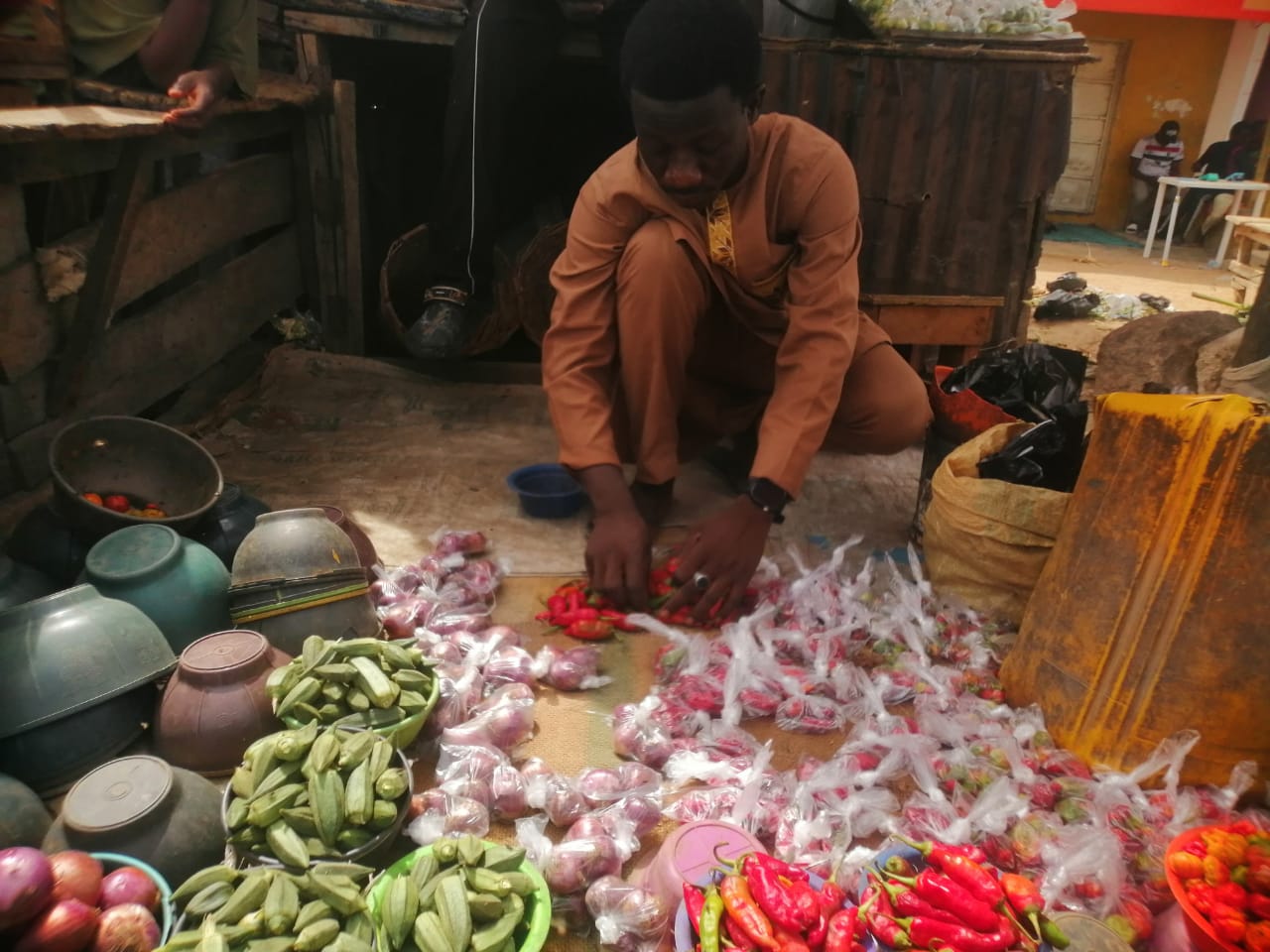
At this time of the year—just before the rainy season begins or when the rains are still uncertain—kitchen realities shift across Northern Nigeria. One of the most noticeable changes is the sharp rise in the cost of kayan miya—a Hausa term that refers to essential soup ingredients such as tomatoes, red bell peppers, scotch bonnet peppers, and onions.
For many households, these ingredients are the backbone of daily meals. Yet, during this period, they become increasingly scarce and expensive, forcing families to adjust their diets and cooking habits.
- EXCLUSIVE: Despite odds, Northern Nigerian women thrive through backyard poultry farming
- Tomato farmers predict steady price hike from May
Whe our reporter went round te city, especially the metropolitan areas, the soup staples, known as Kayan Miya, were found scarced and very expensive. It was gathered that the little that was found on the tables looks rotten and unripe, forcing many households to resort to alternatives.
In many homes, meals are simplified. Women turn to alternatives that require fewer fresh vegetables—dishes like miyan kuka (baobab leaf soup), okra soup, spinach-based soups, or meals prepared mainly with oil and dried chilli powder. Others rely on dried soup ingredients, which, although still costly, are often more affordable than fresh produce.
According to a report by Legit.ng, the prices of major food staples consumed across Nigeria have continued their upward trend, with food inflation climbing to 16.96 per cent in May 2026, worsening pressure on household incomes and raising concerns over the cost of living.
New data released by the National Bureau of Statistics (NBS) showed that food inflation rose from 16.06 per cent recorded in April to 16.96 per cent in May on a year-on-year basis. On a month-on-month basis, food inflation accelerated by 2.98 per cent.
A dealer in Sabon Gari Market, Malam Abubakar Iliya said he almost gave up on the business if not for the fact it’s his only source of income for many decades.
“I almost gave up. The capital is not enough for me to buy what at least 10 people can buy and suffice them. The Kayan Miya is very scarced. Anywhere we go it is difficult to get a basket.
“But we are used to it. It happens every year like this. But this time around it bites harder. May be due to the weather and other related conditions. The scarcity is beyond measure, we are just managing,” he said.
Baaba Huraira, an elderly woman who spoke with Agro Climate News, recalled how this seasonal pattern has long been part of local life:
“When we were children, anytime we were served beans and rice cooked with oil and chilli powder, or dambu more often, we knew that vegetable farms were no longer producing much.”
But what exactly is driving the spike in prices?
At Ja’en Market in Kano, vegetable trader Malam Umar explained that supply has drastically reduced in key production areas.
“There are currently no vegetables available in Kano, Katsina, and Zaria, where we usually source our produce. These days, most supplies come from as far as Niger Republic or Lagos because rainfall has been insufficient. Once the rains fully establish, prices will drop.”
The impact is clear in market prices. A bowl of tomatoes now sells for as much as ₦5,000, red bell peppers for ₦8,000, and scotch bonnet peppers for ₦6,000. For low-income customers, traders now break sales into smaller portions—five scotch bonnets for ₦100, three red bell peppers for ₦200, or six tomatoes for ₦100.
Another layer of the challenge comes from farm conditions. Even when vegetables are cultivated during this period, they often fail to survive due to pests and harsh environmental conditions.
Umar Haruna, a young trader, shed more light on this issue:
“At this time of year, even when vegetables are planted, worms and pests destroy them. Farmers use pesticides, but the problem persists. There is still no lasting solution. That’s why we have to travel long distances to source vegetables, which increases the cost.”
This seasonal cycle highlights the deep connection between climate patterns, agriculture, and food prices. Erratic rainfall, pest infestations, and the cost of transportation all combine to push kayan miya beyond the reach of many households.
However, there is cautious optimism. As the rainy season stabilizes and local farms begin to produce again, supply is expected to improve—and with it, a gradual drop in prices.
Until then, families continue to adapt, proving once again that resilience in the face of climate and economic challenges remains a defining feature of everyday life.