By Zahraddeen Yakubu Shuaibu
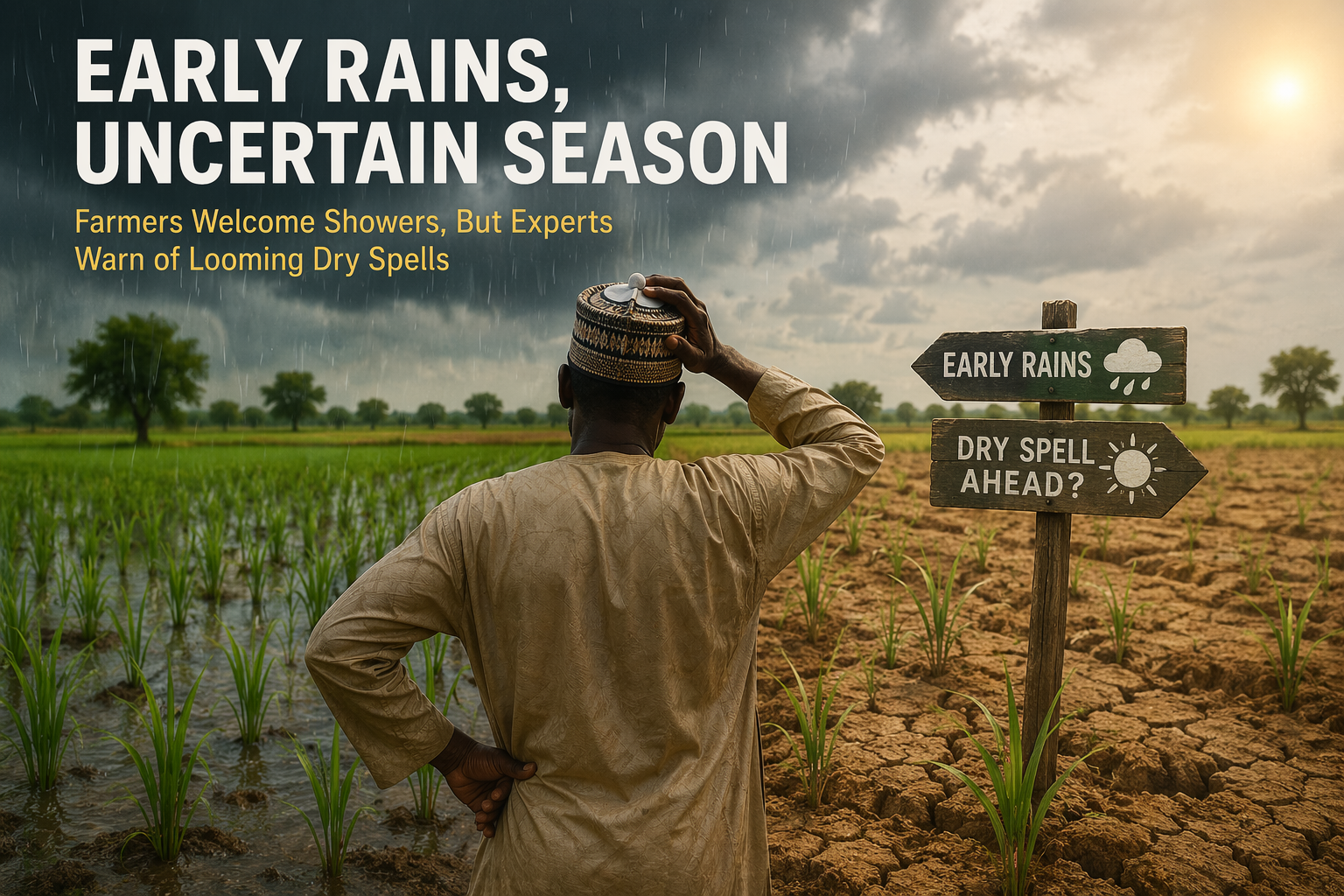
Farmers in Nigeria are left in confusion following the drop of an early rain, signaling the beginning of wet season, though at an unexpected time. In Northern Nigeria, currently, the dry season farming is ongoing. While wheat is on the peak period of harvest, many farmers in Kano, Jigawa, Katsina and other parts of the region have planted rice meant to be harvested before the wet season.
Agro Climate News reports that over the Easter weekend, parts of Nigeria witnessed early rainfall, a welcome sight for communities long accustomed to the parched air of the Harmattan.
- EXCLUSIVE: How INRAE drives climate-smart agriculture solutions for Africa
- Abuja witnesses first heavy rain as residents begin preparations for wet season
The downpour occurred across many states, including parts of Abuja, Kaduna, Nasarawa and Niger States of the North Central region. In Abuja the rain had destroyed some structures while also flooding across major roads courtesy of its heaviness and the failure to prepare for its coming.
Similarly in Dakata and Janguza, and other parts of Kano State, residents stepped outside to watch the showers, some even celebrating what they believed to be the long-awaited start of the rainy season.
Yet, beneath the relief lies a sobering warning: these rains may be deceptive, offering temporary comfort before prolonged dry spells set in. Experts explains that while dry spells are not unusual in certain regions, their intensity and unpredictability are becoming more pronounced.
“An extensive dry spell may result in serious crop failures, which is a loss for the farmers,” one of the experts told Agro Climate News.
NiMet’s 2026 Seasonal Climate Prediction
The Nigerian Meteorological Agency (NiMet) has cautioned that the showers are not the official onset of the rainy season.
According to its 2026 Seasonal Climate Prediction, farmers and rain-dependent communities should brace for interruptions, with dry spells lasting between 28 and 40 days.

The forecast warned of severe dry spells exceeding 15 days between March and May in parts of Oyo and Ogun states.
Dry spells of up to 21 days are also expected between June and August across several northern and central states.
For a country where agriculture remains the backbone of livelihoods, the timing of rainfall is more than a matter of convenience—it is a question of survival.
Climate Signals and Shifting Seasons
Environmentalists point to the unusual timing of the rains and the abrupt end of the Harmattan season as fresh evidence of climate change reshaping Nigeria’s weather patterns.
NiMet has identified 15 states, including Kano, as likely to experience early rainfall this year. As such, it cautioned farmers against rushing to plant, as these early rains can be followed by prolonged dry spells, which could lead to significant agricultural losses.
Early onset is anticipated in: Bayelsa, Rivers, Akwa Ibom, Cross River, Benue, Kogi, Nasarawa, Oyo, parts of Kebbi, Niger, Jigawa, Katsina, Kano, Adamawa, and Taraba states.
On the other hand, late onset of rain is expected in Borno State.
However, experts stress that these early showers should not be mistaken for stability.
Professor Aliyu Barau of the Faculty of Earth and Environmental Sciences at Bayero University Kano explains that while dry spells are not unusual in certain regions, their intensity and unpredictability are becoming more pronounced.
“An extensive dry spell may result in serious crop failures, which is a loss for the farmers,” he says. “But beyond agriculture, citizens in towns and villages may also experience heat stress during these periods. People must take precautions—drink more water, guard against dehydration, and protect their families.”

Barau recognises NiMet’s role in providing science-based predictions, noting that traditional indicators such as migrating birds or insect activity are no longer sufficient in the face of climate variability.
“Science has simplified this for us,” he adds. “The challenge now is ensuring that state governments and agencies effectively communicate these warnings to grassroots communities.”
Farmers’ Dilemma: To Plant or Not to Plant?
For farmers, the rains are both a blessing and a trap. Majority of them are left with different thoughts in their minds as to whether to plant or not. More to their fear is whether the rainy season has commenced and their continued waiting will result may result in them getting late for the season.
Adamu Muhammad, a farmer in Kano, recalls the painful lessons of 2025, when irregular rainfall led to widespread drought and heavy losses.
“We rushed to plant after the first rains, but then the dry patches came, and many of us lost everything,” he says.
This year, he is more cautious, opting for drought-resistant crops such as millet and guinea corn.
For Murtala Salisu, another farmer from Kano, the season is not yet here. “We are used to this situation. It is not yet time. In fact, we have just started the dry season rice planting. This early rain is just a signal that the season is coming.”
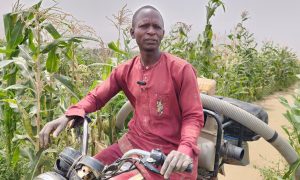
He said while they are aware of the situation but some farmers are confused as to what time they should plant. “Some doesn’t know the appropriate time to plant. They are afraid of planting late which will affect the yields. Last year we lost more than 80 percent to a shortage of rainfall,” he concluded.
NiMet has advised farmers to wait for sustained rainfall before planting, a message echoed by agricultural extension officers across the country.
Yet, the temptation to seize the moment remains strong. With food prices rising and household incomes stretched thin, many farmers feel they cannot afford to delay.
Climate-Smart Solutions
Experts argue that adaptation is no longer optional—it is urgent. Climate-smart farming practices, irrigation support, and improved access to weather information are among the strategies being promoted to mitigate risks.
Professor Barau emphasizes the need for stronger farmer education programmes. “The experience of dry spells in Kano last year highlighted the urgent need for climate adaptation policies,” he says. “We must equip farmers with the knowledge and tools to respond effectively.”
Some farmers are experimenting with staggered planting, spreading their crops across different weeks to reduce the risk of total loss.
Others are turning to community-based irrigation schemes, pooling resources to ensure water availability during dry spells.
These grassroots innovations reflect a growing awareness that climate change is not a distant threat—it is already here.
Beyond the Farms: Public Health and Urban Impact
The implications of shifting climate patterns extend beyond agriculture.
Prolonged dry spells and heat stress pose risks to public health, particularly in urban areas where water scarcity and poor infrastructure compound the problem.
Barau warns that dehydration-related illnesses could rise if citizens fail to take precautions. “It is not just about farmers,” he notes.
“Families in cities must also adapt—hydration, heat management, and awareness are critical.”
The Role of Policy and Governance
While NiMet’s predictions provide valuable guidance, experts stress that effective communication and policy implementation are key.
Barau calls on state governments, ministries, and agencies to ensure that climate warnings reach the grassroots. “When NiMet makes pronouncements, it should not end as a passing message,” he says. “It must be translated into action—support for farmers, public health campaigns, and community engagement.”
Nigeria’s climate adaptation policies remain a work in progress, with gaps in funding, coordination, and enforcement.
Yet, the urgency of the situation is undeniable.
As climate change accelerates, the cost of inaction grows heavier, threatening food security, livelihoods, and national stability.
A Nation at the Crossroads
Across Nigeria, both rural and urban communities are noticing shifts in weather patterns. Familiar seasons are becoming less predictable, demanding urgent adaptation.
For farmers in Kano, the memory of 2024 and 2025’s dry spells is a stark reminder of what is at stake.
“Timely response to these warnings will be key to safeguarding food production, livelihoods, and public health in the months ahead.
“Climate change is reshaping our seasons, and we must reshape our strategies to survive,” Professor Barau concluded.
Agro Climate News